
Online marketplaces have completely changed the way people buy and sell goods. Whether you’re looking for a used car, furniture, electronics, collectibles, or household items, platforms like Facebook Marketplace, Craigslist, OfferUp, and others make it easy to find deals from local sellers. But while these platforms offer convenience and savings, they also create opportunities for scammers, thieves, and fraudsters.
Every year, thousands of buyers lose money through fake listings, counterfeit products, payment scams, and even in-person robberies arranged through marketplace transactions. What begins as a simple search for a bargain can quickly turn into a costly mistake if proper precautions aren’t taken. The good news is that most marketplace scams follow predictable patterns. By understanding the risks and following a few practical safety measures, you can significantly reduce your chances of becoming a victim.
In this guide, you’ll learn how to identify common marketplace scams, safely meet sellers, protect your money, and confidently buy items online without putting yourself at unnecessary risk.
Why Online Marketplace Scams Are So Common
Online marketplaces attract millions of buyers every day because they offer:
- Lower prices
- Local convenience
- Unique products
- Fast transactions
Unfortunately, these same advantages attract scammers. Unlike traditional retail stores, many marketplace transactions occur directly between individuals, often with limited buyer protections. This creates opportunities for criminals to exploit trust, urgency, and bargain hunting. Most scams rely on one simple principle: If a buyer believes they’re getting an amazing deal, they’re more likely to overlook warning signs.
Common Online Marketplace Risks
Before making a purchase, it’s important to understand the most common threats.
Financial Scams
- Fake listings
- Deposit scams
- Non-delivery scams
- Payment fraud
Product Scams
- Counterfeit products
- Damaged goods
- Misrepresented items
- Stolen merchandise
Personal Safety Risks
- Robbery
- Theft
- Assault
- Meeting criminals in unsafe locations
Identity Theft Risks
- Sharing personal information
- Phishing links
- Fake payment confirmations
Understanding these risks is the first step toward avoiding them.
Most Common Items Targeted in Online Marketplace Scams
Electronics ██████████████████████████████ 92
Vehicles ████████████████████████████ 85
Event Tickets █████████████████████████ 78
Luxury Goods ███████████████████████ 72
Collectibles █████████████████████ 65
Furniture █████████████████ 58
Appliances ███████████████ 52
Clothing & Accessories ████████████ 40
1. Be Suspicious of Deals That Seem Too Good to Be True
One of the biggest red flags is an unusually low price. For example:
- A $1,200 smartphone listed for $300.
- A $5,000 motorcycle listed for $1,500.
- High-end electronics selling far below market value.
While legitimate bargains exist, scammers often use unrealistic pricing to attract attention and pressure buyers into acting quickly. If a deal feels impossible, investigate carefully before proceeding.
2. Research the Seller
Before sending money or arranging a meeting, spend a few minutes reviewing the seller. Look for:
- Account age
- Previous listings
- Reviews and ratings
- Profile activity
- Mutual connections (where applicable)
Be cautious if:
- The account was recently created.
- The profile has little activity.
- Information appears inconsistent.
A legitimate seller typically has a visible history.
3. Never Pay Before Seeing the Item
One of the most common marketplace scams involves requesting payment before the buyer receives the product. Scammers often claim:
- The item is in high demand.
- A deposit is required.
- They need payment to “hold” the item.
Avoid sending money before:
- Inspecting the item
- Verifying the seller
- Confirming the product exists
Once money is sent, recovering it can be difficult.
4. Meet in Safe Public Locations
Whenever possible, arrange transactions in public places. Good meeting locations include:
- Police station exchange zones
- Busy shopping centers
- Bank parking lots
- Well-lit public areas
Avoid:
- Isolated locations
- Empty parking lots
- Private residences when unnecessary
Public visibility helps discourage criminal activity.
5. Bring Someone With You
If you’re purchasing an expensive item, consider bringing a friend or family member. A second person can:
- Improve personal safety
- Help inspect the item
- Serve as a witness
- Reduce the likelihood of being targeted
This is especially important for high-value purchases.
6. Inspect the Item Carefully
Never rush an inspection. Check for:
- Damage
- Missing components
- Counterfeit indicators
- Functionality issues
For electronics:
- Turn them on.
- Test key features.
- Verify serial numbers if possible.
For vehicles:
- Request maintenance records.
- Verify ownership documents.
- Consider an independent inspection.

7. Use Secure Payment Methods
Payment choice matters. Safer options may include:
- Cash for local transactions
- Verified payment platforms
- Secure payment systems with buyer protections
Be cautious of requests involving:
- Wire transfers
- Gift cards
- Cryptocurrency
- Unverified payment apps
These methods are frequently associated with fraud.
8. Watch for Marketplace Red Flags
Scammers often reveal themselves through certain behaviors. Warning signs include:
• Pressure to act immediately
• Refusal to meet in person
• Requests for deposits
• Generic responses
• Poor communication
• Excuses for not showing the item
• Unusual payment demands
The more red flags you notice, the more cautious you should become.
9. Verify High-Value Purchases
Extra verification is essential for expensive items.
Vehicles
Confirm:
- Vehicle Identification Number (VIN)
- Ownership records
- Title status
Electronics
Check:
- Serial numbers
- Warranty status
- Activation locks
Luxury Goods
Verify authenticity before purchasing, as counterfeit products are very common on online marketplaces.
10. Protect Your Personal Information
Scammers don’t always want your money. Sometimes they want:
- Phone numbers
- Addresses
- Banking details
- Identification documents
Share only the information necessary to complete the transaction. Avoid sending copies of:
- Driver’s licenses
- Social Security cards
- Financial statements
unless absolutely required and properly verified.
Most Common Marketplace Scam Types

Fake Product Listings: The item doesn’t exist.
Deposit Scams: Victims send money to reserve an item that was never available.
Counterfeit Goods: Products appear genuine but are fake.
Shipping Scams: The seller disappears after receiving payment.
Overpayment Scams: Fraudsters send fake payments and request refunds. Recognizing these tactics can prevent costly mistakes.
Marketplace Safety Checklist
Before making a purchase, ask yourself:
✓ Have I researched the seller?
✓ Have I inspected the item?
✓ Am I meeting in a public place?
✓ Am I using a secure payment method?
✓ Have I avoided sending deposits?
✓ Have I verified ownership where necessary?
✓ Does the deal seem realistic?
If the answer to any of these questions is no, slow down and investigate further.
Marketplace Scam Red Flags
The following chart illustrates common warning signs reported by marketplace fraud victims.
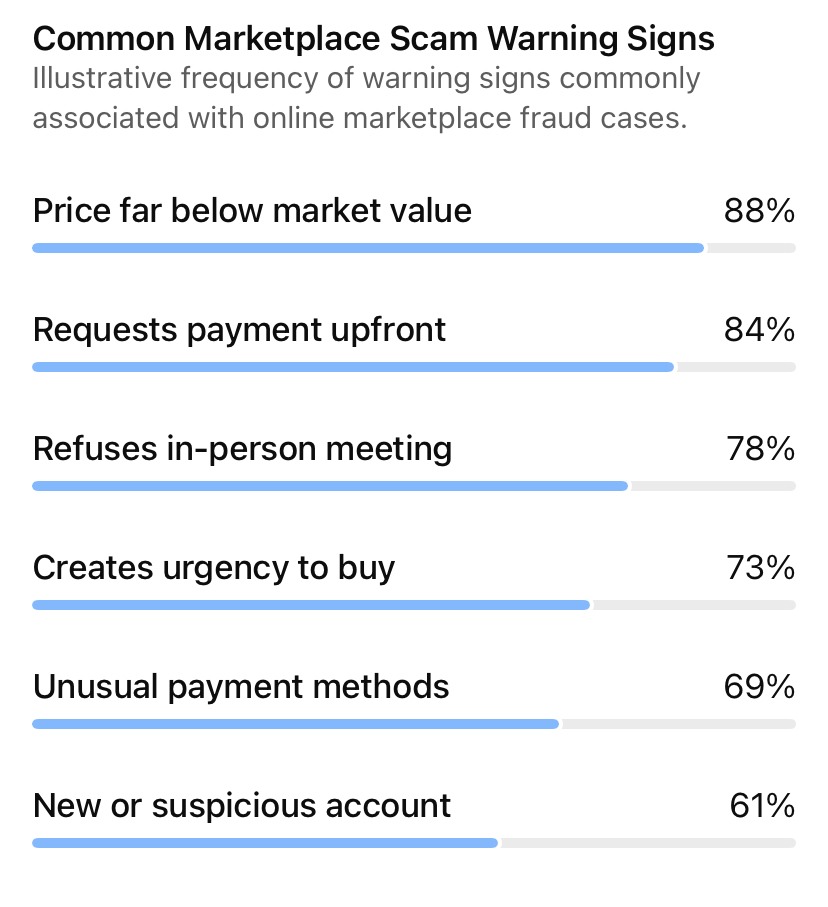
Fraudulent listings often share multiple warning signs. Requests for upfront payment, unrealistic pricing, refusal to meet in person, and pressure tactics are among the most common indicators reported by victims of marketplace scams. The presence of several red flags should encourage buyers to slow down, verify details, and proceed with caution.
Analysis :
One of the biggest mistakes buyers make is focusing on only a single factor—usually the price—while ignoring other warning signs. Scammers often combine multiple tactics to create a sense of urgency and trust. For example, a listing may feature a highly desirable item at an unusually low price while the seller insists on immediate payment and refuses to meet in person. When several of these indicators appear together, the likelihood of fraud increases significantly. Taking a few extra minutes to verify the seller and transaction details can prevent substantial financial losses and personal safety risks.
How to Report Marketplace Fraud
If you suspect a scam:
- Stop communication.
- Do not send additional money.
- Save screenshots and messages.
- Report the listing to the platform.
- Contact your bank if payment was made.
- Report fraud to appropriate authorities.
Prompt reporting may help prevent others from becoming victims.
In Summary
Online marketplaces can be an excellent way to save money, find unique items, and connect with local sellers, but they require the same level of caution you would use in any financial transaction. Most marketplace scams succeed because buyers become distracted by the promise of a great deal and overlook warning signs that would otherwise seem obvious.
The safest buyers are not necessarily the most experienced, they are the most patient. Taking a few extra minutes to research a seller, verify an item, choose a safe meeting location, and use secure payment methods can dramatically reduce your risk. In many cases, those simple precautions are enough to stop a scam before it starts.
Remember, no bargain is worth risking your safety, financial information, or personal security. If something feels suspicious, trust your instincts, slow down, and verify the details. A legitimate seller will understand your caution, while a scammer will often try to rush you into making a decision.