College is an exciting chapter of life. For many students, it’s the first time living away from home, managing their own schedules, making independent decisions, and navigating a new environment. Along with the freedom and opportunities that come with college life, however, come new responsibilities, including personal safety.
Most college campuses are relatively safe environments, but students can still face a variety of risks both on and off campus. From theft and scams to harassment, assault, and online threats, many incidents occur not because students are careless, but because they are unfamiliar with potential dangers or underestimate how quickly situations can change.
The good news is that personal safety doesn’t require living in fear. In fact, most safety experts emphasize awareness, preparation, and good decision-making rather than constant vigilance. Small habits practiced consistently can significantly reduce risk while allowing students to fully enjoy their college experience.
In this guide, we’ll cover 15 practical personal safety tips every college student should know, along with common risks to watch for and simple ways to stay safe on campus, online, and in everyday situations.
Why Personal Safety Matters on Campus
College campuses are often compared to small cities. Thousands of students, faculty members, staff, visitors, and vendors move through campus every day. Residence halls, libraries, sporting events, social gatherings, parking lots, and public transportation systems all create environments where opportunities for crime can occur.
Common incidents reported on college campuses include:
- Theft of personal belongings
- Bicycle theft
- Vehicle break-ins
- Online scams
- Identity theft
- Stalking
- Harassment
- Assault
While serious crimes receive the most attention, property crimes and fraud-related incidents tend to affect students far more frequently.
Common Safety Risks for College Students
| Risk Category | Relative Frequency |
| Theft of Personal Property | 90 |
| Online Scams & Fraud | 82 |
| Identity Theft | 74 |
| Vehicle Break-ins | 68 |
| Harassment & Stalking | 60 |
| Assault-Related Incidents | 45 |
Figure 1: Illustrative comparison of common safety concerns affecting college students. Property crime and fraud-related incidents typically occur more frequently than violent offenses on many campuses.
1. Stay Aware of Your Surroundings
One of the most effective personal safety habits is simply paying attention. Avoid becoming completely distracted by:
- Phones
- Headphones
- Text messages
- Social media
Situational awareness helps you identify potential problems before they develop.
2. Use Well-Lit Routes at Night
If you’re walking after dark:
- Stay on designated paths
- Choose well-lit areas
- Avoid shortcuts through isolated locations
- Walk where other people are present
Criminals generally prefer locations with fewer witnesses.
3. Walk With Friends Whenever Possible
There is safety in numbers. Whether returning from:
- Classes
- Libraries
- Sporting events
- Social gatherings
Walking with others reduces vulnerability and increases awareness. Many campuses also offer escort services for students traveling at night.
4. Keep Dorm Room Doors Locked
Many campus thefts occur because doors are left unlocked. Always lock:
- Dorm room doors
- Apartment entrances
- Windows when appropriate
Even short absences create opportunities for theft.
5. Protect Your Valuables
Don’t leave:
- Laptops
- Tablets
- Phones
- Backpacks
- Wallets
unattended in libraries, cafeterias, or study spaces. It only takes a few seconds for a theft to occur.
6. Be Careful What You Share Online
Oversharing on social media can create security risks. Avoid publicly posting:
- Your location in real time
- Class schedules
- Dorm information
- Travel plans
The less personal information available publicly, the better.
7. Use Strong Passwords and MFA
College students are frequent targets of cybercriminals. Protect accounts by using:
- Strong unique passwords
- Password managers
- Multi-factor authentication (MFA)
This is especially important for:
- School accounts
- Banking apps
8. Be Alert to Campus Scams
Students are often targeted by scams involving:
- Fake jobs
- Scholarship fraud
- Housing scams
- Phishing emails
Be cautious whenever someone requests:
- Money
- Personal information
- Account credentials
Always verify through official channels.
9. Trust Your Instincts
If a situation feels wrong:
- Leave
- Create distance
- Seek help
Your intuition can often detect warning signs before your conscious mind fully processes them.
10. Know Campus Emergency Resources
Every student should know:
- Campus police contact information
- Emergency phone locations
- Campus safety apps
- Medical services
Preparation improves response times during emergencies.
11. Practice Safe Rideshare Habits
Before entering a rideshare vehicle:
- Verify the driver’s name
- Confirm the license plate
- Check the vehicle description
- Share trip details with someone you trust
Never assume a vehicle is your ride without verifying.
12. Watch Your Drinks at Social Events
Never leave drinks unattended, and ensure you avoid accepting beverages from unknown individuals, as drink tampering remains a concern at parties and social gatherings.
13. Keep Your Phone Charged
A phone is often your quickest connection to:
- Friends
- Emergency services
- Navigation
- Transportation
Carry a charger or portable battery pack when possible.
14. Learn Basic Self-Defense Principles
You don’t need extensive training to benefit from learning:
- Escape techniques
- Awareness strategies
- De-escalation skills
Confidence and preparedness can improve personal safety.
15. Report Suspicious Activity
Many crimes are prevented because someone reported unusual behavior. Report:
- Suspicious individuals
- Unattended property
- Security concerns
- Threats
Campus security relies heavily on community awareness.
Personal Safety Checklist for Students
Before heading out, ask yourself:
• Is my phone charged?
• Have I shared my plans with someone?
• Am I using a safe route?
• Are my valuables secured?
• Do I know how to contact emergency services?
• Am I paying attention to my surroundings?
Simple questions can help prevent larger problems.
Common Safety Mistakes Students Make
Many incidents result from avoidable mistakes, including:
1. Leaving Belongings Unattended: A common cause of campus theft.
2. Ignoring Security Alerts: Students sometimes dismiss warnings that contain important information.
3. Oversharing on Social Media: Public information can be exploited by criminals.
4. Walking Alone in Isolated Areas: Particularly late at night.
5. Reusing Weak Passwords: Increases vulnerability to cybercrime.
Recognizing these habits is the first step toward correcting them.
Campus Safety and Crime Awareness
Most Common Student Safety Risks
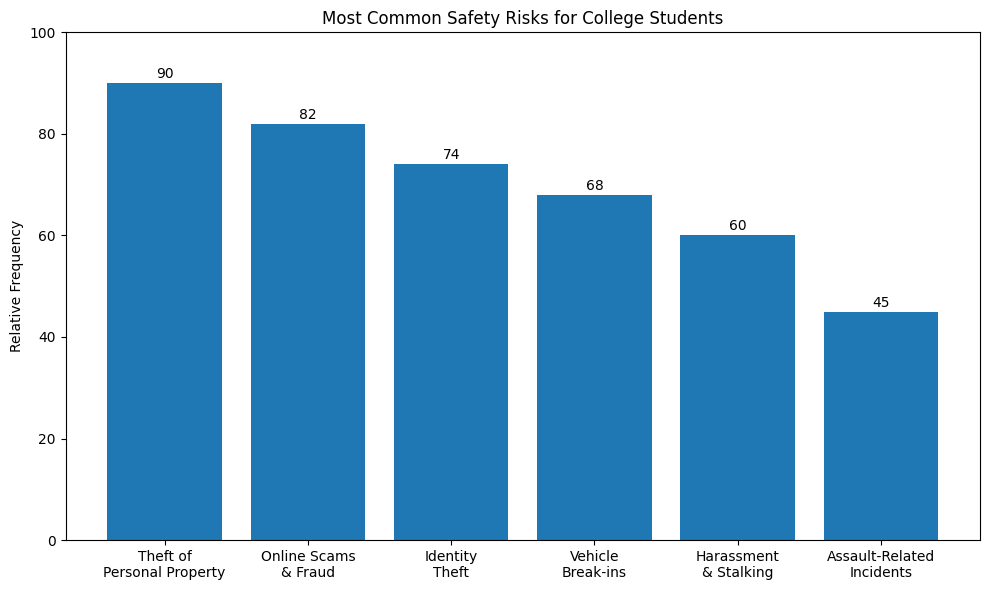
Source: Educational illustration based on campus safety trends, student victimization studies, and crime prevention guidance from higher education institutions and public safety organizations.
Final Words
College should be a time of learning, growth, and new experiences, not constant worry about personal safety. Fortunately, staying safe is often less about reacting to danger and more about developing smart habits that reduce risk before problems arise. Simple actions such as securing your belongings, staying aware of your surroundings, protecting your online accounts, and knowing how to access campus resources can make a significant difference over time.
No safety strategy can eliminate every risk, but preparation and awareness can greatly improve your ability to avoid dangerous situations and respond effectively when challenges occur. By applying the tips in this guide and encouraging friends to do the same, students can create a safer environment for themselves and their campus community. Personal safety is ultimately about confidence, preparedness, and making informed decisions that allow you to fully enjoy the college experience while protecting what matters most.