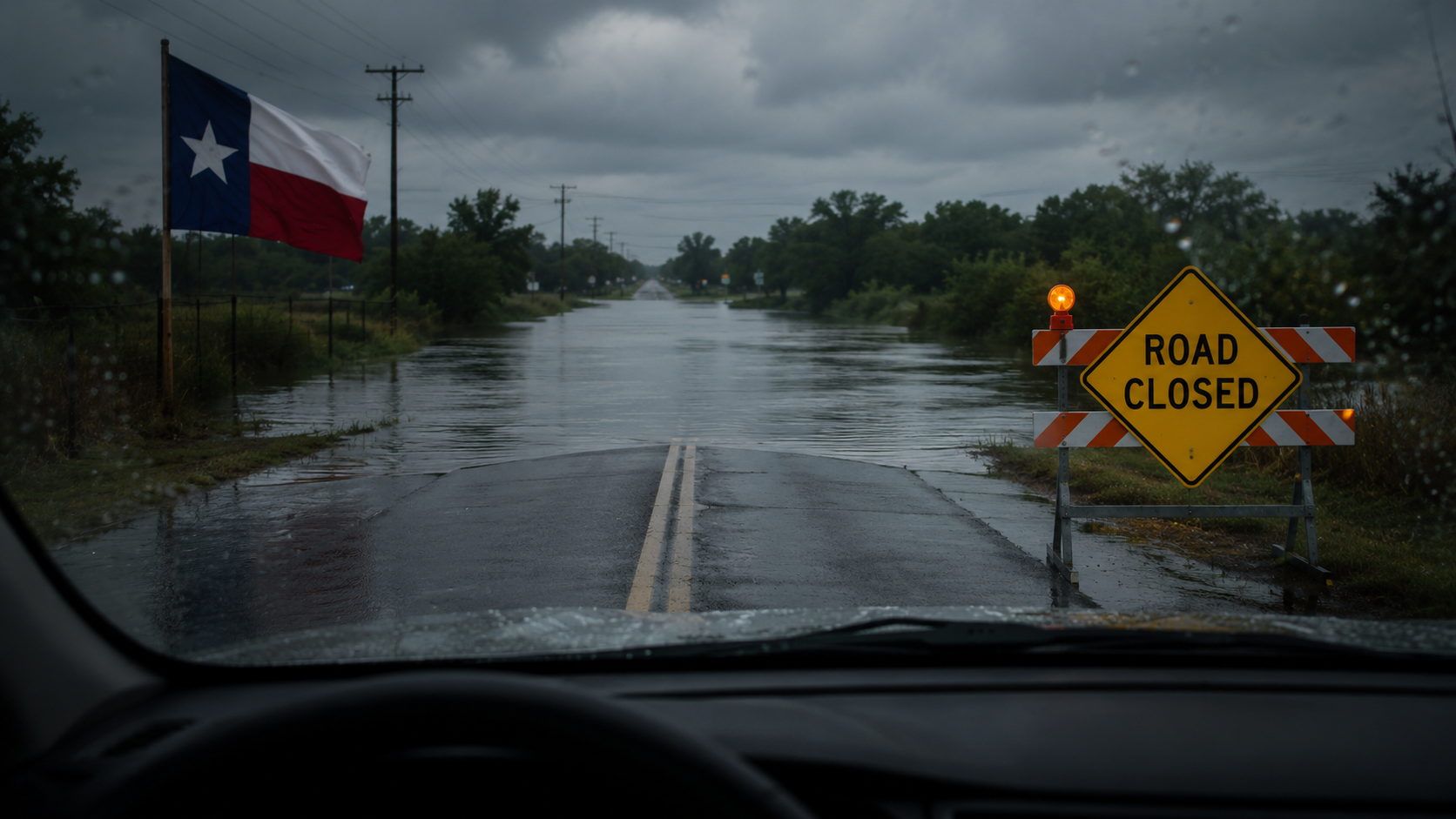
Flooding is one of the most dangerous weather hazards Texas drivers can encounter. It can happen during hurricanes and tropical storms, but also during thunderstorms, slow-moving storm systems, flash floods and intense rainfall events far from the coast.
And unlike many road hazards, floodwater can make a familiar road almost impossible to judge. A road that you drove safely yesterday may be underwater today. A bridge that normally carries thousands of vehicles may become impassable within minutes. Water can conceal washed-out pavement, debris, open drainage channels and electrical hazards. The most important rule is therefore simple; If water is covering the road and you cannot confidently determine that the roadway is safe, don’t drive through it. Turn around.
The National Weather Service’s Turn Around, Don’t Drown campaign warns that just 6 inches of fast-moving water can knock an adult off their feet, around 12 inches can carry away most cars, and about 2 feet can sweep away SUVs and trucks.
Why Flooding Is Such a Serious Problem in Texas
Texas is enormous, geographically diverse and exposed to several different types of flooding. The state contains:
- Gulf Coast communities
- Major rivers
- Low-lying coastal plains
- Hill Country watersheds
- Large metropolitan areas
- Extensive highway networks
- Numerous low-water crossings
That combination means flooding can look very different depending on where you live. A coastal community may experience storm surge. A Hill Country community may experience a rapid flash flood. Houston may experience urban flooding after intense rainfall. A rural driver may encounter a flooded creek or low-water crossing. The danger is different, but the basic driving rule remains the same, Never underestimate moving water.
Texas Flooding Can Happen Almost Anywhere
One of the most dangerous misconceptions is “I’m nowhere near the coast, so flooding isn’t really my problem.” But unfortunately that’s not how flooding works.
In July 2025, devastating flooding struck the Texas Hill Country following intense rainfall. NOAA reported that the Guadalupe River in Kerr County rose more than 20 feet in only a few hours, with more than 100 people losing their lives. The event demonstrated just how quickly conditions can change. A community doesn’t need to be on the Gulf Coast to experience catastrophic flooding.
Texas Has a Long History of Major Flood Events
Flooding is not a new Texas problem. NOAA’s billion-dollar disaster database records 190 billion-dollar weather and climate disasters affecting Texas between 1980 and 2024. Of those, 9 were classified as flooding events and 16 as tropical cyclones, alongside numerous severe-storm events that can also produce significant flooding. The number doesn’t mean every event affected every part of Texas. It demonstrates something more important; Texas repeatedly experiences weather events capable of producing enormous economic damage.
The Biggest Danger for Drivers: Flash Flooding
Flash flooding is particularly dangerous because it can develop rapidly. You may not see a dramatic wall of water approaching. Instead:
- Rain begins falling upstream.
- Water collects rapidly.
- Creeks and drainage channels rise.
- Roads become covered.
- Water begins moving across the pavement.
- The roadway becomes unsafe.
And sometimes the worst weather isn’t even directly above you. Rain falling upstream can send water toward you even after rainfall has stopped at your location.
What Is a Flash Flood?
A flash flood is flooding that develops rapidly, generally within a short period after intense rainfall or another sudden release of water. This is why drivers should never rely solely on what the sky looks like immediately around them. A blue or relatively calm sky does not guarantee that the road ahead is safe.
Water is heavy, and moving water adds a whole lot of force to it. That’s why a flooded road shouldn’t be judged simply by asking: “How many inches deep does it look?” The more important question is: How fast is the water moving, and what is underneath it? The National Weather Service says that:
- 6 inches of fast-moving water can knock over an adult.
- 12 inches can carry away most cars.
- 2 feet can carry away SUVs and trucks.
So a vehicle doesn’t need to be completely submerged before it becomes uncontrollable.
Floodwater vs. Vehicle Risk
| Approximate Water Depth | Potential Danger |
| 6 inches | Can knock an adult down if moving rapidly |
| 12 inches | Can float/carry away many cars |
| 18 inches | Can carry away larger vehicles |
| 24 inches | Can sweep away many SUVs and trucks |
These are general safety thresholds, not guarantees. Vehicle size, water speed, road surface, current and other conditions can dramatically change the outcome. The practical lesson is that You don’t need to know the exact depth, just know that If the road is flooded, don’t enter it.
Why Floodwater Is Hard to Judge
Water can make a road look deceptively shallow. A driver may see “Just a few inches.” But several things can be hidden beneath the surface.
The road itself may be damaged: as Floodwater can wash away pavement or undermine the roadbed.
The water may be deeper than it looks: Especially at dips, crossings and drainage channels.
The current may be stronger than it appears: Even relatively shallow water can exert tremendous force when moving quickly.
Debris may be underwater: Branches, rocks, signs, vehicles and other objects can become obstacles.
You may lose traction: Once tires lose contact with the road surface, steering and braking become far less effective.
The Most Dangerous Places for Drivers
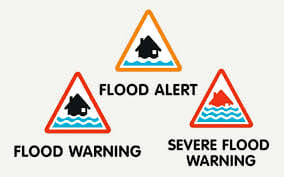
There are certain locations deserve that are extreme dangerous and unpredictable therefore deserving extra caution. These may include;
1. Low-Water Crossings: These are roads designed to cross areas that can periodically flood. They can be especially dangerous because the road may look normal under ordinary conditions. Once water rises, the crossing can become a trap. So never assume that because you have crossed the same location safely before, it is safe today.
2. Underpasses: Road underpasses can collect enormous amounts of water. A flooded underpass can be particularly deceptive because the water may look like a large puddle rather than a deep pool. So therefore do not for any reason enter it.
3. Bridges: Floodwater can move around and underneath bridges with enormous force. Even if the bridge itself remains intact, water may cover the roadway or undermine surrounding infrastructure. Follow barricades and closure signs.
4. Rural Roads: Rural roads can present additional challenges because:
- Lighting may be limited.
- Roads may have fewer barriers.
- Emergency services may be farther away.
- Creeks and drainage channels can cross roadways.
- Drivers may be unfamiliar with local flood-prone areas.
5. Urban Streets: Cities aren’t immune. Intense rainfall can overwhelm drainage systems. Houston and other large Texas cities have experienced significant urban flooding during major storms. Floodwater can accumulate rapidly around:
- Underpasses
- Parking lots
- Low-lying intersections
- Drainage channels
- Freeways
- Residential streets
The National Weather Service’s message is deliberately simple: Turn Around, Don’t Drown. If you encounter water covering a roadway:
- Don’t drive through it.
- Don’t walk through it.
- Don’t move barricades.
- Don’t drive around road-closure signs.
- Don’t assume another vehicle made it through, so you can too.
The National Weather Service specifically warns drivers never to drive around barriers blocking a flooded road because the road may have collapsed underneath the water.
What If Another Driver Goes Through? Well you just have to let them. This is important because a vehicle ahead of you might successfully cross the flooded water, but this doesn’t prove that the road is safe, as that vehicle may have:
- Different tires
- Different weight
- Different clearance
- Entered at a different point
- Encountered a different current
And you may not see what happened after it disappeared around the bend. Don’t use another driver’s decision as your safety test.
But What If You Don’t Know How Deep the Water Is?
This is one of the easiest decisions in the entire article: Don’t find out with your vehicle. If you can’t determine that the roadway is safe, turn around. There is no reward for successfully driving through floodwater.
Another important this h to not is never to Drive Around a Barricade. This deserves its own section. Road barriers are there because authorities have determined that the roadway may be unsafe. Moving or driving around them can put you directly into an area where:
- The road has collapsed.
- Water is moving rapidly.
- Debris is present.
- A bridge is damaged.
- Emergency crews are working.
The National Weather Service explicitly warns against driving around flood barriers.
What If Floodwater Starts Rising While You’re Driving?
This is where things become much more serious. If you encounter flooding:
1. Stop entering the water.
If you haven’t entered yet, don’t.
2. Turn around if you can safely do so.
Move toward higher ground.
3. Follow official instructions.
Use emergency alerts and road-closure information.
4. Don’t drive into deeper water.
The situation can worsen extremely quickly.
What If Your Vehicle Becomes Trapped in Floodwater?
Now this is officially an emergency case. The correct response depends on the vehicle’s location, water level, current and whether you can safely exit.
If the vehicle is still on relatively stable ground then you can safely exit and move toward higher ground without entering dangerous moving water But If water is rapidly rising around the vehicle then Call emergency services and communicate your location. Follow emergency instructions.
But If unfortunately the vehicle is being swept away, The situation becomes immediately life-threatening. Do not remain focused on saving the vehicle. Your objective is survival.
Don’t Try to Push Your Vehicle Out
If water is moving around your vehicle, don’t assume you can simply get out and push. Moving floodwater can knock a person down extremely quickly. Remember: 6 inches of fast-moving water can knock an adult off their feet. A vehicle can be replaced. A person caught in moving floodwater may not get another chance.
Another frightening scenarios is a case whereby your car is swept away. If the vehicle is moving in floodwater:
- Stay calm.
- Call 911 if possible.
- Follow emergency instructions.
- If you can safely escape without entering dangerous current, do so.
- Do not attempt to swim through strong moving water unless there is absolutely no safer alternative.
The exact escape procedure can depend on the vehicle, water depth and whether the vehicle is submerged or still floating. This is why avoiding the water in the first place is vastly safer than trying to escape afterward.
Why Nighttime Flooding Is Especially Dangerous
Flooding after dark creates another layer of risk. At night:
- Water depth is harder to judge.
- Road damage is harder to see.
- Barricades may be less visible.
- Debris can disappear into darkness.
- Drivers may not see moving water until they’re close to it.
If severe flooding is occurring, postpone unnecessary travel. A delayed trip is better than an emergency rescue.
Don’t Rely Only on Your GPS
Navigation apps are useful. But they’re not perfect. A GPS may continue directing you along a road that has just become flooded or closed. During severe weather, check:
- Local emergency alerts
- National Weather Service warnings
- Texas Department of Transportation information
- Local law enforcement
- County emergency management
TxDOT provides statewide transportation information and road-condition resources for Texas drivers. Check Road Conditions Before You Leave, and If severe weather is affecting your area, ask; Do I actually need to make this trip? If the answer is no, postpone it. If the trip is necessary, check current road conditions and closures before leaving. Don’t wait until you’re already staring at floodwater.
Flooding And Texas Highways
Texas has one of the largest road networks in the United States. That means flooding can disrupt transportation across enormous distances. A major flood can result in:
- Highway closures
- Detours
- Traffic congestion
- Damaged bridges
- Stranded motorists
- Emergency-response delays
The safest route isn’t necessarily the fastest route. During severe weather: Choose the route with the lowest risk, not merely the shortest travel time.
What Should You Do If Your Vehicle Is Flooded?
Once you’re safely out of danger:
Don’t immediately restart the vehicle.
If significant water has entered the engine or electrical system, attempting to start it can worsen damage.
Document the damage.
Take photographs and video if it is safe.
Contact your insurer.
Ask about coverage and next steps.
Have the vehicle professionally inspected.
A flooded vehicle may have hidden electrical and mechanical damage.
Flood Insurance vs. Auto Insurance
This is an important distinction. For homes, standard homeowners insurance generally does not automatically cover flood damage; separate flood insurance may be necessary.
For vehicles, coverage depends on the auto policy. Drivers should check their policy before flood season, not after their vehicle is underwater. FEMA’s data show that Texas had about 665,093 residential NFIP flood-insurance contracts in force as of May 2022, representing only about 8.59% of the state’s residential structures in that dataset. That illustrates why understanding your actual insurance coverage matters.
Flooding Doesn’t Have to Destroy Your House to Cost You Money. A flood can damage:
- Vehicles
- Roads
- Appliances
- Electrical systems
- Furniture
- Flooring
- HVAC equipment
- Business property
And even when physical damage is limited, road closures and transportation disruption can create significant economic consequences.
The Hidden Danger: Contaminated Floodwater
Floodwater isn’t clean rainwater. It can contain:
- Sewage
- Fuel
- Chemicals
- Bacteria
- Animal waste
- Sharp debris
- Dead animals
Avoid direct contact whenever possible. Children should never be allowed to play in floodwater.
Another Major Hazard: Downed Power Lines
Never assume a power line is safe because you don’t see sparks. Floodwater can conduct electricity. If you see a downed power line: Stay away. Don’t drive through water near a suspected electrical hazard. Report it to the appropriate emergency or utility authority.
What About Pedestrians? The same principle applies to people walking. The National Weather Service warns that only 6 inches of fast-moving water can knock down an adult. So don’t think: “I’m not driving, I’ll just walk across.” Moving floodwater can be dangerous even on foot.
Flood Safety for Parents
Children are naturally curious about water. After flooding, they may see:
- New ponds
- Streams
- Flooded streets
- Drainage channels
These can be extremely dangerous. Keep children away from floodwater, drainage channels and damaged infrastructure. Never assume shallow-looking water is safe to play in.
What Should Truck and SUV Drivers Know?
A larger vehicle does not make you invincible. SUVs and trucks have more ground clearance than many cars, but they can still be swept away. The National Weather Service warns that around 2 feet of rushing water can carry away SUVs and trucks. Four-wheel drive doesn’t change the laws of physics. Traction does not make a vehicle immune to moving water.
What About Pickup Trucks?
Pickup trucks are sometimes driven into floodwater because drivers assume their weight will keep them stable. That’s dangerous. A strong current can exert enough force to move very heavy vehicles. The question isn’t: “Is my truck big enough?” It’s “Why am I entering water that I don’t know is safe?”
What to Do Before a Major Rainstorm
A little preparation can prevent a lot of trouble.
Before leaving home:
☑ Check the weather
☑ Check flood warnings
☑ Check road conditions
☑ Charge your phone
☑ Fill your vehicle if severe weather is expected
☑ Know alternate routes
☑ Avoid known flood-prone roads
☑ Tell someone your planned route if conditions are severe
Your Emergency Vehicle Kit: Every Texas driver should consider keeping:
- Flashlight
- Portable power bank
- First-aid kit
- Drinking water
- Non-perishable snacks
- Reflective vest
- Basic vehicle tools
- Work gloves
- Phone charger
- Emergency warning equipment
Keep the kit secured so it doesn’t become a hazard during sudden braking.
A Simple Decision Tree for Flooded Roads
When you see water ahead:
CAN I SEE THE ROAD CLEARLY?
No → Turn around.
Yes → Continue assessing.
IS WATER COVERING THE ROAD?
Yes → Don’t enter it.
IS THERE A BARRICADE?
Yes → Do not bypass it.
IS WATER MOVING ACROSS THE ROAD?
Yes → Turn around.
AM I UNSURE ABOUT THE DEPTH?
Yes → Turn around.
That’s it, You don’t need to calculate water depth. Uncertainty itself is a reason to stop.
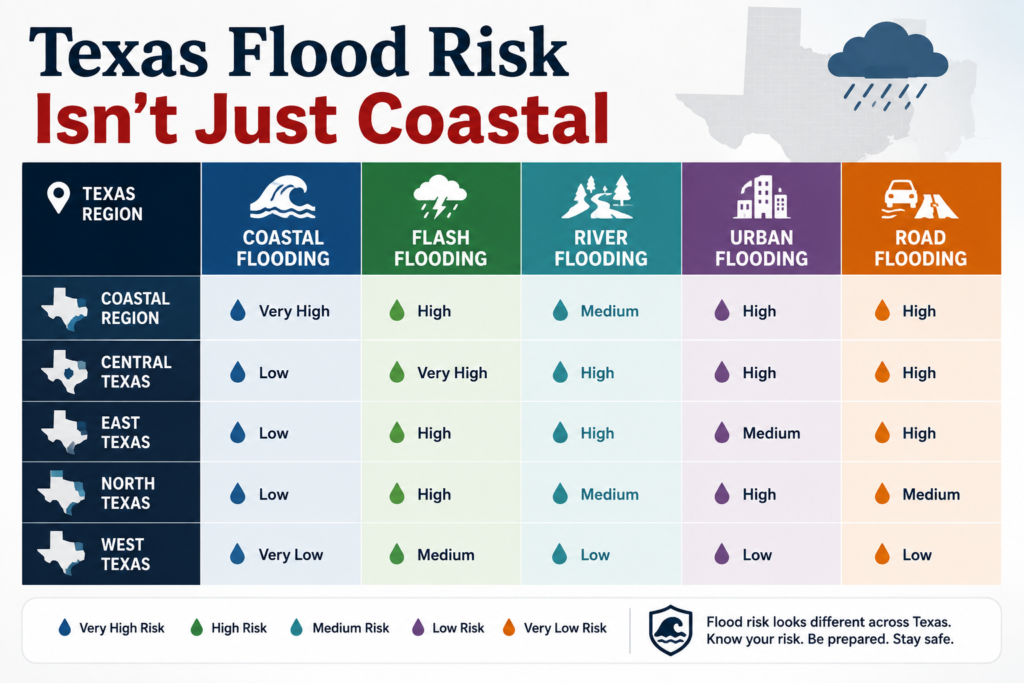
Texas Flooding: Why the Risk Is Bigger Than the Coast
| Flood Hazard | Coastal Texas | Central Texas | North/East Texas |
| Storm surge | 🔴 High | 🟢 Low | 🟢 Low |
| Flash flooding | 🟠 Moderate–High | 🔴 High | 🔴 High |
| River flooding | 🟠 Moderate | 🔴 High | 🔴 High |
| Urban flooding | 🔴 High in vulnerable areas | 🟠 Moderate–High | 🟠 Moderate–High |
| Road flooding | 🔴 High | 🔴 High | 🟠 High |
| Tropical-storm rainfall | 🔴 High | 🟠 Moderate–High | 🟠 Moderate–High |
This is an educational comparison rather than an official hazard map. Actual risk depends on location, elevation, drainage, rainfall intensity and the storm’s track.
2025 Was a Reminder of How Quickly Flood Risk Can Change
The July 2025 Central Texas flooding was particularly important because it demonstrated the danger of rapid-onset flooding in the Hill Country. NOAA reported that the Guadalupe River in Kerr County rose more than 20 feet within hours, while more than 100 people lost their lives and thousands of homes were damaged.
NOAA’s broader review of 2025 also found that the United States experienced widespread significant flooding, with July recording 1,434 flash-flood warnings from the National Weather Service, the second-highest July total in 40 years. For Texas drivers, the lesson is important: Flood risk isn’t confined to hurricane season or the coastline.
What NOT to Do During a Texas Flood
❌ Don’t drive through water because another car did.
❌ Don’t move barricades.
❌ Don’t drive around road closures.
❌ Don’t assume a truck or SUV is safe.
❌ Don’t walk through rapidly moving water.
❌ Don’t let children play in floodwater.
❌ Don’t touch downed power lines.
❌ Don’t rely exclusively on GPS.
❌ Don’t drive through flooded underpasses.
❌ Don’t assume water is shallow because you can see the pavement.
❌ Don’t take unnecessary trips during severe flooding.
Texas Flood Safety Checklist
Before driving
☐ Check weather alerts
☐ Check road conditions
☐ Know alternate routes
☐ Charge your phone
☐ Keep an emergency kit in your vehicle
If you encounter water
☐ Stop
☐ Assess the situation
☐ Don’t enter the water
☐ Turn around
☐ Follow barricades and closure signs
If flooding begins around you
☐ Move toward higher ground when safe
☐ Avoid moving water
☐ Call emergency services if you’re trapped
☐ Follow official instructions
After flooding
☐ Avoid contaminated water
☐ Stay away from power lines
☐ Don’t restart a heavily flooded vehicle
☐ Document damage
☐ Contact your insurer
Frequently Asked Questions
1.How deep does water have to be to move a car?
The National Weather Service warns that around 12 inches of rushing water can carry away most cars, while about 2 feet can carry away SUVs and trucks.
2.Can a truck drive through floodwater?
A truck’s size doesn’t make it immune to moving water. Around 2 feet of rushing water can sweep away SUVs and trucks.
3.What should I do if water covers the road?
Turn around. Do not attempt to determine whether your vehicle can make it across.
4.Is six inches of water dangerous?
Yes, if it is moving quickly. The National Weather Service says 6 inches of fast-moving water can knock an adult off their feet.
5.Why shouldn’t I drive around a barricade?
Because the roadway underneath the water may be damaged or completely washed out.
6.Can flash flooding happen when it isn’t raining where I am?
Yes. Heavy rainfall upstream can cause water levels to rise downstream even when local rainfall is limited.
7.Is floodwater safe to walk through?
No. It can contain contaminants, debris, electrical hazards and hidden drop-offs.
8.What if my car gets flooded?
Get yourself to safety first. Don’t attempt to restart a heavily flooded vehicle until it has been properly assessed.
9.Does four-wheel drive make floodwater safe?
No. Four-wheel drive improves traction in certain conditions but cannot prevent a vehicle from being swept away by moving water.