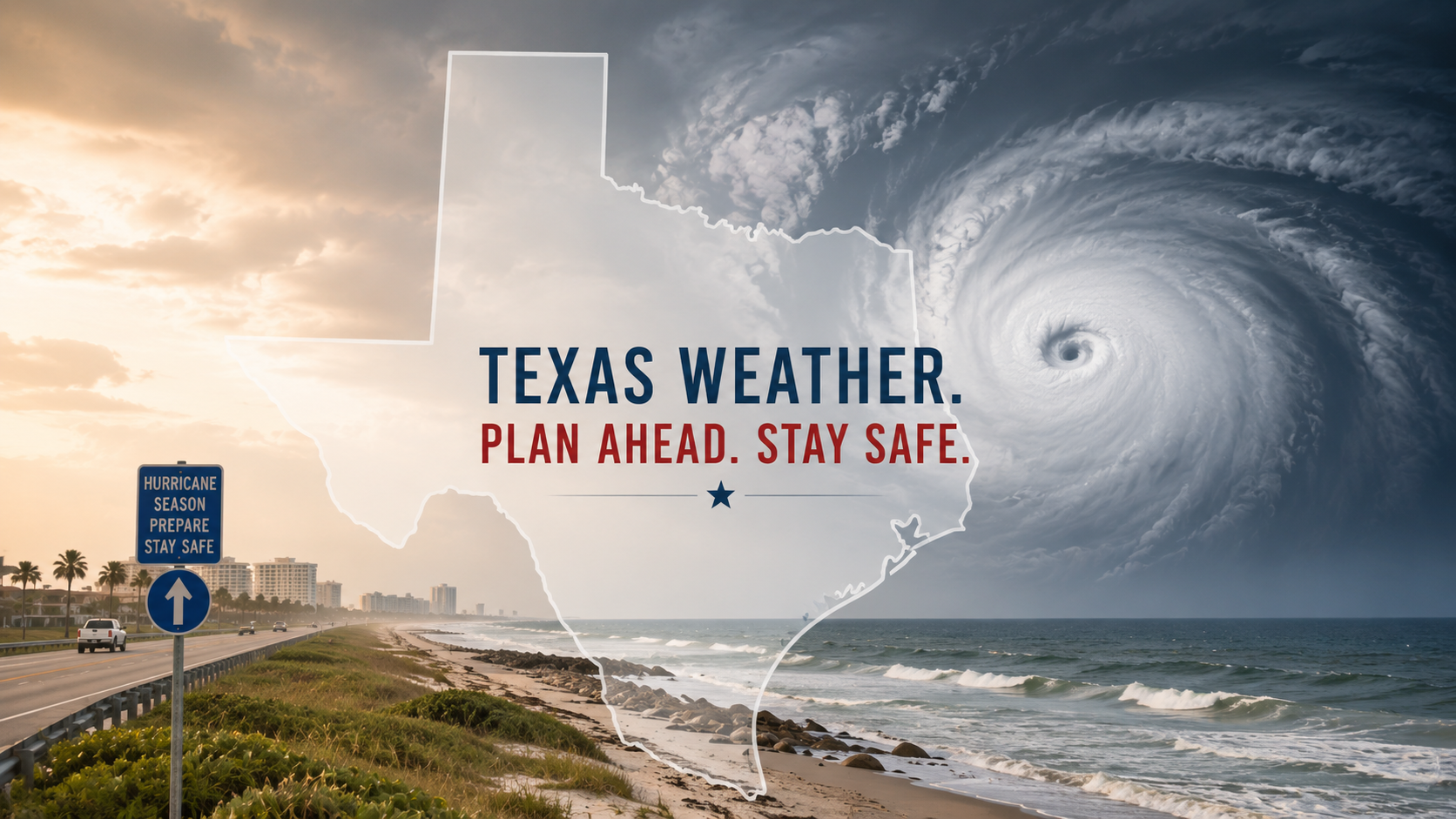
Hurricanes are among the most destructive natural hazards affecting Texas. Every year, millions of Texans living along the Gulf Coast and farther inland face the possibility of tropical storms or hurricanes. But the danger isn’t limited to the immediate coastline.
A hurricane can push dangerous water onto coastal communities, dump enormous amounts of rain hundreds of miles inland, produce tornadoes, knock out electricity, damage homes and leave roads impassable long after the storm’s strongest winds have disappeared.
For that reason, hurricane preparedness in Texas isn’t simply about surviving the wind. It’s about understanding the different hazards a hurricane can create and knowing when to evacuate, where to shelter and how to avoid becoming trapped by flooding or debris.
Why Texas Is Vulnerable to Hurricanes
Texas has more than 360 miles of Gulf shoreline, stretching from the Louisiana border to the Mexican border. That coastline contains some of the state’s largest population centers, ports, industrial facilities and tourist communities. Major population centers and coastal areas including:
- Houston
- Galveston
- Corpus Christi
- Port Arthur
- Beaumont
- Freeport
- Brownsville
- South Padre Island
can be exposed to tropical-storm hazards. But hurricane impacts don’t stop at the coast. A storm moving inland can continue producing Heavy rainfall, Inland flooding, Tornadoes, Strong winds and even Power outages. That’s why someone living hundreds of miles from the Gulf should still understand hurricane safety.
How Dangerous Are Hurricanes in Texas?
Texas has experienced some of the most destructive hurricanes in U.S. history.
Hurricane Harvey — 2017
Hurricane Harvey remains one of the clearest examples of why rainfall can be just as dangerous as wind. Harvey produced catastrophic flooding across southeastern Texas, particularly around the Houston metropolitan area.
The National Hurricane Center estimated Harvey caused approximately $125 billion in damage, making it one of the costliest tropical cyclones in U.S. history. Harvey also demonstrated another critical lesson; A storm doesn’t need to be producing hurricane-force winds over your neighborhood to be dangerous.
Hurricane Ike — 2008
Ike caused extensive destruction along the Texas coast and generated a devastating storm surge around Galveston Bay.
Hurricane Rita — 2005
Rita demonstrated how dangerous evacuation itself can become when enormous numbers of people attempt to leave simultaneously. The lesson from these storms is straightforward; Preparation needs to happen before the storm threatens the coastline.

The 5 Major Hurricane Hazards in Texas
When people hear “hurricane,” they often think about wind. But hurricanes create multiple hazards.
1. Storm Surge
Storm surge is abnormal water rise caused primarily by a storm’s winds pushing seawater toward the coastline. It can be deadly. Storm surge can:
- Flood homes
- Destroy roads
- Damage vehicles
- Cut off communities
- Push debris inland
- Contaminate freshwater
- Prevent emergency responders from reaching people
If you’re in a storm-surge evacuation zone, don’t wait until water is already rising before leaving.
2. Inland Flooding
This is one of the biggest misconceptions about hurricanes. You don’t have to live on the coast to experience hurricane flooding. A tropical system can dump enormous amounts of rain far inland. Flooding can occur in:
- Houston
- Austin
- San Antonio
- Beaumont
- Corpus Christi
- Rural communities
- Low-lying neighborhoods
- Areas near rivers and bayous
And remember; Floodwater can move faster and be deeper than it looks.
3. Hurricane-Force Winds
Strong winds can Tear roofs apart, Break windows, Knock down trees, Damage power lines, Turn loose objects into projectiles and sometimes Destroy poorly secured structures. This is why it is imporatmt to alwsys be prepared and Before a hurricane arrives, bring inside anything that could become airborne. That includes:
- Patio furniture
- Trash cans
- Tools
- Bicycles
- Plant pots
- Decorations
- Loose construction materials
4. Tornadoes
Hurricanes can produce tornadoes, particularly in their outer rainbands. These tornadoes can occur well away from the storm’s center. So even if the hurricane’s eye is nowhere near you, you should still monitor tornado warnings.
5. Power Outages
A hurricane can leave communities without electricity for hours or even days. Power outages can affect:
- Refrigeration
- Air conditioning
- Medical equipment
- Water systems
- Mobile communications
- Gas stations
- ATMs
- Traffic signals
For Texas residents, prolonged outages can become especially dangerous during extreme heat.
Hurricane Watch vs. Hurricane Warning
There a difference between hurricane watch and hirricane warning, where one is anticipatory, the other is alarming and therefore Understanding these terms is essential.
Hurricane Watch
A hurricane is possible within the specified area, generally within 48 hours. It means practically means that you should start Preparinb now for a potential upcoming hirricane.
Hurricane Warning
Hurricane conditions are expected, generally within 36 hours, and therefore a warning is issued in order for people to Take immediate protective action. These definitions come from the National Hurricane Center. Don’t wait for a warning before beginning preparations. Which is why it is advisable to prepare early way before the Hurricane Season even arrives.
The best time to carry out Thai preparation for a hurricane is before one is approaching Texas. Hurricane season in the Atlantic officially runs from, June 1 – November 30, with the greatest concentration of activity generally occurring later in the summer and early fall. But preparation shouldn’t begin when the first storm enters the Gulf, instead plans and procedures should already be in place months before going way back as early as April.
Build a Texas Hurricane Emergency Kit

Every household should have enough essential supplies to remain self-sufficient for several days.
Water: A common emergency-planning recommendation is approximately 1 gallon of water per person per day for drinking and sanitation. For a family of four preparing for three days: 4 × 3 = 12 gallons, And remember to account for pets.
Food: Choose food that doesn’t require refrigeration and little or no cooking with a very long shelf life so as to last the unpredictable time period of the hurricane. Examples include: Canned food, Peanut butter, Crackers, Ready-to-eat meals or cereals, Shelf-stable drinks. And don’t forget to have your handy manual can opener.
Your Hurricane Kit Should Also Include emergency appliances like Flashlights, Battery banks, Spare batteries, First-aid supplies, Battery or hand-crank radio, Necessary medications, Hygiene supplies, Work gloves, Basic protective equipment, Copies of important documents, Some cash, Basic tools, Pet supplies and Baby supplies where needed. Also ensure you Prepare Your Home Before the storm arrives by;
Securing windows: Use appropriate storm shutters or other approved protective systems. Don’t rely on ordinary tape as a substitute for proper storm protection.
Cleaning gutters: Blocked drainage systems can worsen water accumulation.
Trimming vulnerable branches: Remove dead or unstable branches before hurricane season.
Securing outdoor objects: Bring loose objects inside.
Checking the roof: Repair obvious damage before hurricane season.
Protecting important documents: Keep important records in waterproof containers or secure digital backups.
Know Your Evacuation Zone. This is one of the most important steps for coastal Texans. Don’t simply ask: “Is my house near the beach?” Ask: “Am I in an evacuation zone?” Texas coastal communities use evacuation maps and local emergency-management plans to determine areas that may need to leave.
Your exact evacuation zone depends on your location. Check your county and local emergency-management authority before hurricane season, not while traffic is already building. Now if authorities issue an evacuation order for your area, take it seriously. Don’t assume: “I’ve survived storms before because every hurricane is different in Size, Track, Speed, Rainfall, Surge and Wind field. These variables can produce very different consequences. So If you are ordered to evacuate, leave early enough to avoid becoming trapped by worsening conditions.
Don’t Wait Until the Last Minute before doing the needful. As one of the worst evacuation strategies is: “I’ll see what happens first.” If thousands of people are attempting to leave simultaneously, highways can become congested. Fuel stations can run out of gasoline, Hotels can fill, Roads can close And weather conditions can deteriorate. So it is therefore important that you have your route planned before evacuation becomes necessary.
What to Pack if You Evacuate
Each person should ideally have a grab-and-go bag containing:
- Identification
- Medication
- Phone and charger
- Important documents
- Clothing
- Toiletries
- Water
- Snacks
- Cash
- Basic first aid
For children, include:
- Comfort items
- Diapers
- Formula
- Extra clothing
- Necessary medications
For pets:
- Food
- Water
- Medication
- Leash/carrier
- Vaccination records
Don’t Forget Your Car
Your vehicle may become your most important evacuation tool. Before leaving check your Tires, Fuel level, Battery, Fluids, Lights and all neccessary emergency equipment Keep the fuel tank reasonably full when a hurricane threatens and never deliberately drive through floodwater to “beat the storm.”
What If You Are Told to Shelter in Place?
Now there are also situations where not every Texas resident will need to evacuate, which is why it is importing to listen to news reports and follow instructions based on your area and location. If authorities instruct you to shelter in place, then Stay indoors, Move to an interior room away from windows, Close curtains and blinds, Bring emergency supplies inside, Monitor official alerts, Keep phones charged, Avoid windows during strong winds, Don’t go outside simply because the rain temporarily stops. The center of a hurricane can produce a deceptive period of calm.
What Is the Eye of a Hurricane?
The eye is the relatively calm center of a mature hurricane. When the eye passes overhead, winds can temporarily decrease dramatically. But that does not mean the hurricane is finished. The opposite side of the eyewall can arrive quickly, bringing dangerous winds again. So Don’t leave your shelter just because conditions suddenly become calm. Wait for official confirmation that the danger has passed.
That last one matters, After a major storm, damaged roads, power lines, unstable buildings and floodwater can make exploring extremely dangerous.
Hurricane Safety for Apartment Residents

If you love in an apartment of high rise building the the case might be a bit different for you. Apartment living creates different challenges and it is therefore important that you know:
- Where the building’s emergency exits are
- Where you can shelter
- How to contact management
- Where fire extinguishers are located
- Whether windows have storm protection
- Whether elevators may become unavailable
If flooding threatens the building, follow official evacuation instructions rather than waiting for conditions to become severe.
Hurricane Safety for People With Disabilities
Emergency planning should account for mobility and medical needs before the storm. Prepare:
- Medication
- Mobility equipment
- Backup batteries
- Medical supplies
- Communication devices
- Transportation arrangements
If you depend on electricity for medical equipment, make backup arrangements before severe weather arrives. Don’t wait until the power goes out.
What Happens After the Hurricane?
The danger doesn’t necessarily end when the storm leaves. In fact, the aftermath can create entirely new hazards.
Stay Away From Downed Power Lines
Never touch a fallen power line. Don’t assume a line is safe simply because it isn’t sparking. Keep your distance and report it to the appropriate utility or emergency authority.
Avoid Floodwater
Floodwater can contain:
- Sewage
- Chemicals
- Debris
- Bacteria
- Hidden electrical hazards
- Dangerous animals
Even shallow water can hide hazards. Children should never be allowed to play in floodwater.
Be Careful With Generators
Portable generators can be lifesaving during power outages. They can also cause fatal carbon-monoxide poisoning if used incorrectly. Never operate a gasoline-powered generator inside a home, garage or enclosed space. Keep generators outdoors and away from doors, windows and ventilation openings.
The CDC warns that carbon monoxide from generators can kill people and recommends placing generators at least 20 feet from the house with exhaust directed away from the building.
Improper generator connections can send electricity backward through power lines and seriously injure utility workers. Use appropriate transfer equipment installed by a qualified professional when connecting a generator to household circuits.
Food Safety After a Power Outage
A refrigerator doesn’t keep food safe indefinitely after losing power. Keep refrigerator and freezer doors closed as much as possible. If you aren’t sure whether food remains safe, when in doubt, throw it out. Don’t taste questionable food to determine whether it’s safe.
Drinking Water After a Hurricane
Flooding and infrastructure damage can compromise water supplies. If local authorities issue a: Boil-water notice, which Follow the instructions exactly. Don’t assume bottled-looking tap water is automatically safe simply because it appears clear. Monitor your local water utility and emergency-management agency.
Beware of Post-Hurricane Scams
Unfortunately, disasters can create opportunities for criminals. Be cautious of:
- Fake contractors
- Fake insurance representatives
- Charity scams
- Price gouging
- Identity theft
- Phishing messages
- Fake government assistance programs
Don’t pay large amounts upfront to an unknown contractor simply because they promise immediate repairs. Verify licenses, insurance and references where appropriate.
Hurricane Safety: The Numbers
For the article’s data section, I’d include a simple visual showing the scale of historical Texas hurricane disasters.
Major Texas Storms
| Storm | Year | Major Impact |
| Hurricane Harvey | 2017 | Catastrophic flooding |
| Hurricane Ike | 2008 | Severe storm surge and coastal damage |
| Hurricane Rita | 2005 | Major wind, surge and evacuation impacts |
| Hurricane Alicia | 1983 | Significant Houston-area damage |
| Hurricane Carla | 1961 | Major coastal hurricane |
Harvey’s estimated $125 billion damage figure makes it particularly useful for demonstrating why hurricane preparedness remains essential.
Texas Hurricane Risk by Hazard
| Hazard | Coastal Texas | Inland Texas |
| Storm surge | 🔴 Very High | 🟢 Low |
| Hurricane winds | 🔴 High | 🟠 Moderate |
| Heavy rainfall | 🔴 High | 🔴 High |
| Inland flooding | 🔴 High | 🔴 High |
| Tornadoes | 🟠 Moderate | 🟠 Moderate |
| Power outages | 🔴 High | 🟠 Moderate–High |
| Extreme heat after storm | 🟠 Moderate | 🔴 High |
Important: This is an educational risk comparison rather than an official hazard map. Actual risk varies substantially by storm track, elevation, geography and local infrastructure.
Texas Hurricane Emergency Checklist
Before hurricane season:
☐ Know your evacuation zone
☐ Create an emergency plan
☐ Build an emergency kit
☐ Store water
☐ Check insurance coverage
☐ Maintain your vehicle
☐ Prepare your home
☐ Identify shelters
☐ Plan for pets
☐ Charge backup batteries
When a storm approaches:
☐ Monitor official forecasts
☐ Fill your vehicle with fuel
☐ Secure outdoor objects
☐ Protect windows
☐ Charge phones
☐ Gather documents
☐ Prepare medications
☐ Follow evacuation orders
During the storm:
☐ Stay indoors
☐ Stay away from windows
☐ Monitor emergency alerts
☐ Avoid floodwater
☐ Don’t go outside during the eye
Afterward:
☐ Watch for downed power lines
☐ Avoid floodwater
☐ Use generators safely
☐ Follow boil-water advisories
☐ Check on vulnerable neighbors safely
☐ Document property damage
☐ Watch for scams
Frequently Asked Questions
When is hurricane season in Texas?
Texas is affected by the Atlantic hurricane season, which officially runs from June 1 through November 30.
What is the most dangerous part of a Texas hurricane?
It depends on the location. Coastal communities can face catastrophic storm surge, while inland areas can experience dangerous rainfall, flooding and tornadoes.
Should I evacuate during a hurricane?
If local authorities issue an evacuation order for your area, follow it. Don’t wait until roads become flooded or traffic becomes severely congested.
Can hurricanes cause tornadoes in Texas?
Yes. Tropical cyclones can produce tornadoes, particularly in their outer rainbands.
How much water should I store?
A common emergency-planning baseline is approximately one gallon per person per day, with additional water needed for pets and special circumstances.
Should I drive during a hurricane?
Avoid unnecessary travel during dangerous conditions. If you are evacuating, leave before conditions deteriorate and follow official evacuation routes.
Can I drive through floodwater?
No. Even water that appears shallow can conceal hazards or move a vehicle. Turn Around, Don’t Drown.
How far should a generator be from my house?
The CDC recommends operating portable generators at least 20 feet from the home, with exhaust directed away from the building.
Final Takeaway
Hurricane safety in Texas isn’t about predicting exactly where the next storm will make landfall. It’s about being prepared before you know the answer.
Know your evacuation zone. Have an emergency kit. Keep your vehicle ready. Protect your home. Follow evacuation orders. Never drive through floodwater. Stay indoors during dangerous conditions and treat the aftermath with the same caution as the storm itself.
Most importantly, remember that hurricane danger doesn’t end when the rain stops. Floodwater, damaged buildings, downed power lines, contaminated water, unsafe roads and carbon monoxide from improperly used generators can continue threatening lives for days afterward. For Texans, preparedness isn’t panic. It’s giving yourself more options when the weather takes yours away.