
Texas is one of the largest and most diverse states in America, home to more than 31 million residents spread across bustling metropolitan areas, growing suburbs, and rural communities. Like every state, Texas experiences a wide range of criminal activity each year, from property crimes and financial fraud to violent offenses and emerging cyber threats.
While headlines often focus on high-profile incidents, the crimes that affect Texans most frequently are often the ones that receive less attention. Understanding which crimes occur most often can help individuals, families, and businesses make informed decisions about personal safety, property protection, and crime prevention.
Crime data also provides valuable insight into broader trends affecting communities across the state. By examining the most commonly reported offenses, residents can better understand where risks exist and what practical steps can be taken to reduce them.
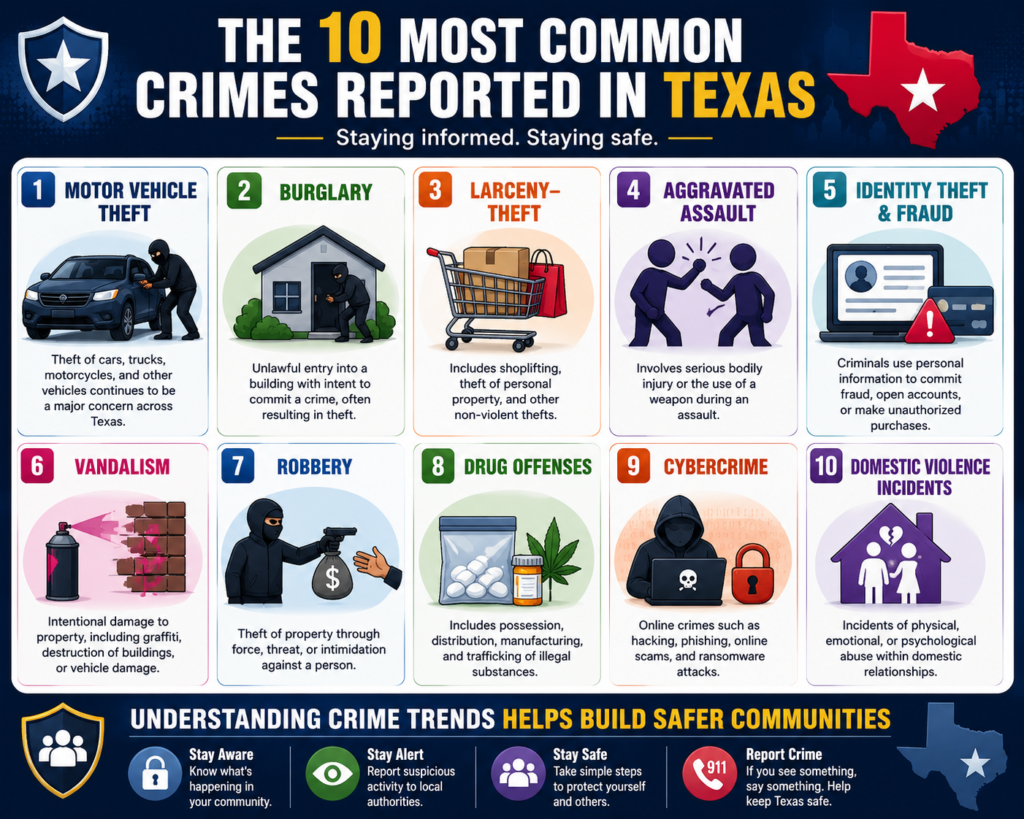
In this guide, we’ll explore the ten most common crimes reported in Texas, explain how they occur, discuss current trends, and provide prevention tips to help keep you and your family safe.
Understanding Crime in Texas
Before diving into specific offenses, it’s important to understand that not all crimes are equally common. Crime is generally divided into two broad categories:
Violent Crimes
These involve force or the threat of force against another person. Examples include:
- Murder
- Robbery
- Aggravated assault
- Sexual assault
Property Crimes
These involve the theft or destruction of property without direct physical harm to a victim. Examples include:
- Burglary
- Theft
- Vehicle theft
- Vandalism
Historically, property crimes account for a significantly larger share of reported criminal incidents in Texas than violent crimes.
Texas Crime at a Glance
Based on recent statewide crime reporting data:
- Property crime rates remain substantially higher than violent crime rates.
- Theft-related offenses account for a large percentage of reported crimes.
- Vehicle theft has increased in many urban areas over the past several years.
- Cyber-enabled crimes and fraud continue to grow rapidly.
- Large metropolitan areas generate the highest volume of crime reports due to population density.
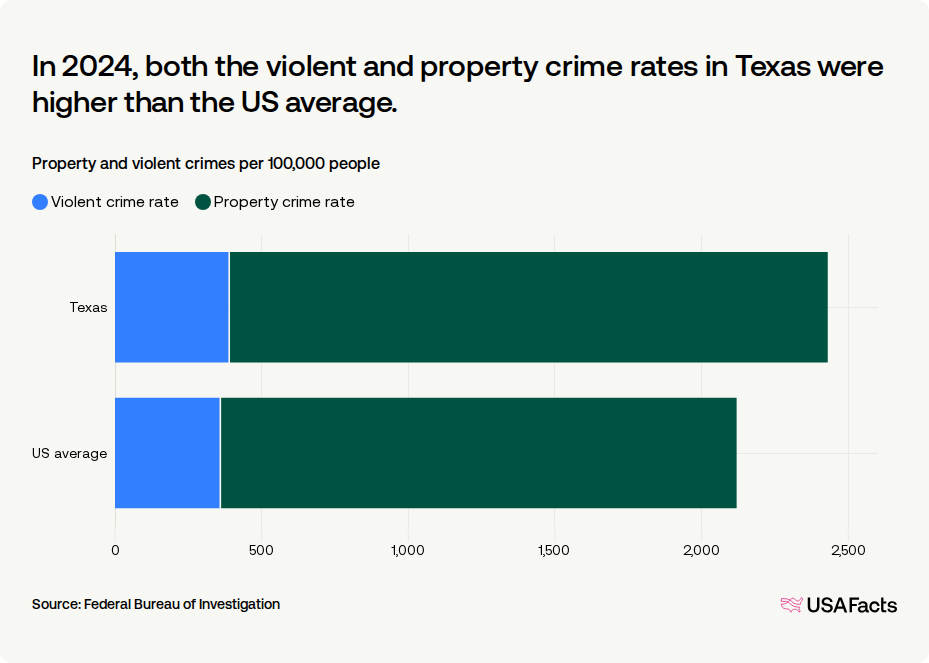
Source: Ratio of Average Crimes Rate in Texas Against USA
1. Larceny-Theft
Larceny-theft is consistently the most commonly reported crime in Texas. This offense involves taking someone else’s property without permission and without the use of force. Examples include:
- Shoplifting
- Package theft
- Bicycle theft
- Theft of personal belongings
- Theft from vehicles
Why It’s So Common
Many thefts are crimes of opportunity. Unlocked vehicles, unattended property, and visible valuables can attract criminals.
Prevention Tips
• Lock vehicles and homes
• Avoid leaving valuables in plain sight
• Use package tracking and secure delivery locations
2. Motor Vehicle Theft
Vehicle theft remains a major concern throughout Texas. Criminals target:
- Cars
- Trucks
- SUVs
- Motorcycles
- Commercial vehicles
Modern theft methods increasingly involve electronic key-fob exploits and vehicle relay attacks.
Prevention Tips
• Park in well-lit areas
• Use steering-wheel locks
• Install vehicle tracking systems
• Never leave keys inside vehicles
3. Burglary
Burglary occurs when someone unlawfully enters a building with the intent to commit a crime. Common targets include:
- Homes
- Apartments
- Businesses
- Storage facilities
Prevention Tips
• Install quality locks
• Improve outdoor lighting
• Use security cameras
• Maintain occupied appearances during travel
4. Aggravated Assault
Aggravated assault is one of the most frequently reported violent crimes in Texas. This offense generally involves:
- Serious bodily injury
- Use of a weapon
- Threats involving deadly force
While not every assault results in severe injury, aggravated assault carries more serious legal consequences than simple assault.
5. Fraud and Identity Theft
Fraud-related crimes continue to grow across Texas. Common examples include:
- Identity theft
- Credit card fraud
- Online scams
- Investment fraud
- Business email compromise
As more financial activity moves online, fraudsters continue to find new opportunities to exploit victims.
Prevention Tips
• Enable multi-factor authentication
• Monitor financial accounts
• Review credit reports regularly
6. Vandalism and Criminal Mischief
Vandalism involves intentionally damaging or destroying property. Examples include:
- Graffiti
- Property damage
- Broken windows
- Vehicle damage
Although often considered less serious than theft or assault, vandalism can create significant repair costs for victims.
7. Robbery
Unlike theft, robbery involves taking property through force, intimidation, or threats. Robbery may occur:
- On the street
- At businesses
- During vehicle-related incidents
- In residential settings
Because robbery involves direct interaction with victims, it is classified as a violent crime.
8. Drug-Related Offenses
Drug crimes continue to account for a significant portion of arrests across Texas. Common offenses include:
- Possession
- Distribution
- Manufacturing
- Trafficking
Law enforcement agencies continue to address both traditional narcotics and emerging synthetic substances.
9. Cybercrime
Cybercrime has become one of the fastest-growing crime categories affecting Texans. Common forms include:
- Phishing attacks
- Online fraud
- Account takeovers
- Data breaches
- Ransomware
Many cybercrimes are underreported, meaning the true scope is likely much larger than official figures suggest.
10. Domestic Violence-Related Offenses
Domestic violence incidents continue to generate a significant number of law enforcement responses throughout Texas. These cases may involve:
- Physical violence
- Threats
- Harassment
- Stalking
- Protective order violations
Domestic violence affects individuals across all age groups, income levels, and communities.
Which Crimes Are Increasing?

Several categories have shown notable growth in recent years:
Cybercrime: The expansion of digital services has created more opportunities for online criminals.
Fraud: Identity theft and financial scams continue to rise.
Vehicle Theft: Some urban areas have experienced increases in vehicle-related crime.
Organized Retail Theft: Retailers increasingly report coordinated theft operations targeting stores.
What Texans Can Do to Stay Safe
While crime trends vary by location, several safety habits can reduce risk:
• Lock homes, vehicles, and garages
• Use strong passwords and multi-factor authentication
• Monitor financial accounts
• Install security cameras and outdoor lighting
• Verify online transactions before sending money
• Stay informed about local crime trends
• Report suspicious activity promptly
Small preventive measures often make a significant difference.
Final Word
Crime affects every community differently, but understanding the most commonly reported offenses in Texas provides valuable insight into the risks residents are most likely to encounter. While violent crimes often receive the most attention, property crimes, fraud, theft, and cybercrime impact far more Texans each year and can result in significant financial and emotional consequences.
The encouraging news is that many crimes are preventable. Awareness, preparedness, and simple security measures can dramatically reduce the likelihood of becoming a victim. Whether it’s securing your home, protecting your personal information online, or staying informed about local crime trends, proactive prevention remains one of the most effective tools available.
Ultimately, crime statistics are more than just numbers, they highlight areas where communities can focus their efforts to improve safety. By understanding the most common crimes reported in Texas and taking practical steps to reduce risk, residents can play an important role in creating safer neighborhoods and stronger communities across the state.