Fraud is one of the most widespread and costly forms of crime in the modern world. Every day, criminals use deception, manipulation, and technology to steal money, personal information, and financial assets from unsuspecting victims.
While many people assume fraud only affects the elderly or those who are less familiar with technology, the reality is very different. Fraudsters target people of all ages, professions, and income levels. In fact, many scams succeed not because victims are careless, but because criminals have become increasingly sophisticated in how they exploit trust, urgency, fear, and human behavior.
From phishing emails and identity theft to investment scams and credit card fraud, today’s fraud schemes come in many forms. Some occur online, others happen over the phone, through text messages, social media platforms, or even in person. What they all have in common is a single goal: convincing victims to hand over money, information, or access.
According to the FBI’s Internet Crime Complaint Center (IC3), Americans reported more than $21 billion ($20.877 billion) in cyber-enabled fraud and cybercrime losses in 2025, a record-breaking figure that continues the upward trend seen over the last decade. Fraud has become a multi-billion-dollar criminal industry, making awareness and prevention more important than ever.
In this guide, you’ll learn ten of the most common types of fraud, how they work, warning signs to watch for, and practical steps you can take to protect yourself and your finances.
What Is Fraud?
Fraud is the intentional use of deception, misrepresentation, or dishonest tactics to obtain money, property, services, or personal information from another person.
In simple terms; Fraud occurs when someone lies or manipulates information for financial or personal gain.
Fraud can target individuals, businesses, government agencies, and financial institutions. While the methods vary, most fraud schemes rely on convincing victims to trust false information or act before they have time to verify the facts.
Why Fraud Is Increasing
Several factors have contributed to the growth of fraud in recent years:
- Increased internet usage
- Online banking and digital payments
- Social media platforms
- Data breaches exposing personal information
- Mobile payment applications
- Artificial intelligence-powered scams
- Global communication technologies
As more aspects of daily life move online, fraudsters have gained access to larger pools of potential victims.
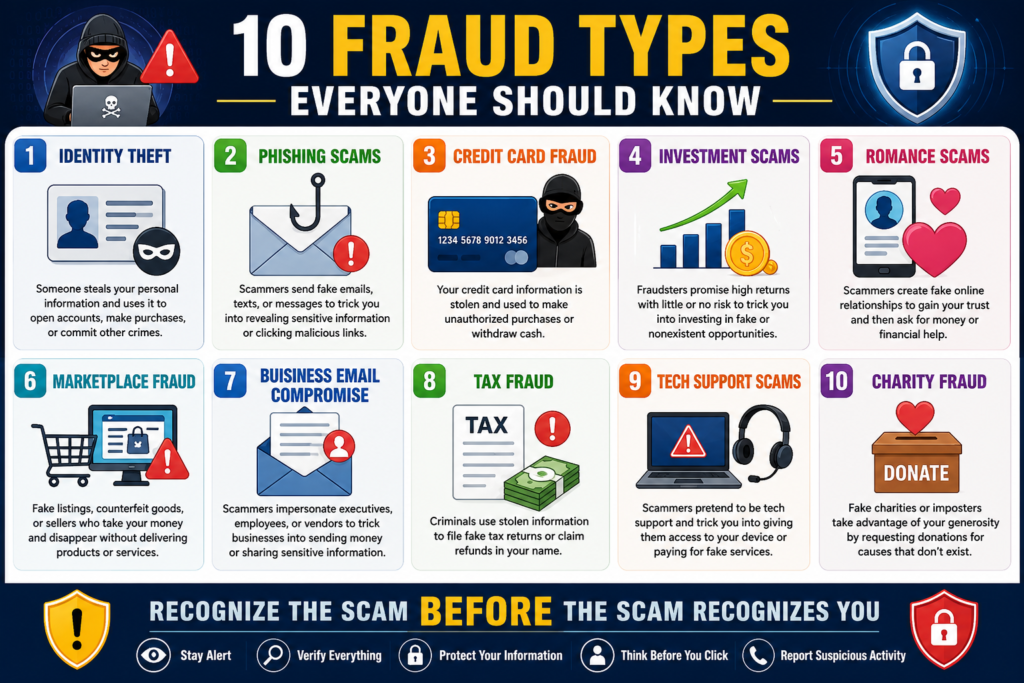
1. Identity Theft
Identity theft occurs when criminals steal personal information and use it to impersonate someone else. They may use stolen information to:
- Open financial accounts
- Apply for loans
- Make purchases
- Commit tax fraud
- Access existing accounts
Warning Signs
• Unrecognized transactions
• Unexpected credit inquiries
• New accounts you didn’t open
• Debt collection notices for unknown debts
How to Protect Yourself
✓ Monitor financial accounts regularly
✓ Review credit reports
✓ Use strong passwords
✓ Enable multi-factor authentication
2. Phishing Scams
Phishing is one of the most common fraud tactics used today. Criminals send emails, texts, or messages pretending to be legitimate organizations. Common impersonations include:
- Banks
- Government agencies
- Delivery companies
- Employers
- Technology providers
Warning Signs
• Urgent requests
• Suspicious links
• Requests for passwords or personal information
How to Protect Yourself
✓ Verify requests independently
✓ Avoid clicking unexpected links
✓ Check website addresses carefully
3. Credit Card Fraud
Credit card fraud occurs when stolen card information is used for unauthorized purchases or transactions. Criminals may obtain card information through:
- Data breaches
- Skimming devices
- Phishing attacks
- Malware
Protection Tips
✓ Monitor statements frequently
✓ Use transaction alerts
✓ Report suspicious activity immediately
4. Investment Scams
Fraudsters often promise unusually high returns with little or no risk. Examples include:
- Ponzi schemes
- Fake cryptocurrency investments
- Fraudulent trading platforms
- Unregistered investment opportunities
Red Flag
If an investment guarantees extraordinary profits with little risk, caution is warranted.
Protection Tips
✓ Research investments thoroughly
✓ Verify licensing and registration
✓ Be skeptical of pressure tactics
5. Romance Scams
Romance scammers build emotional relationships with victims before requesting money. They often:
- Avoid meeting in person
- Create elaborate personal stories
- Invent emergencies requiring financial assistance
Protection Tips
✓ Never send money to someone you haven’t met
✓ Verify identities
✓ Be cautious of rapid emotional escalation
6. Online Marketplace Fraud
Scammers exploit platforms where people buy and sell goods online. Examples include:
- Fake listings
- Nonexistent products
- Payment scams
- Counterfeit goods
Protection Tips
✓ Use secure payment methods
✓ Meet in safe public locations
✓ Verify seller profiles
7. Business Email Compromise (BEC)
BEC scams target organizations by impersonating executives, vendors, or employees. Criminals attempt to:
- Redirect payments
- Obtain sensitive information
- Gain account access
Protection Tips
✓ Verify payment requests
✓ Use approval procedures
✓ Train employees on fraud awareness
8. Tax Fraud
Tax fraud often involves criminals using stolen information to file fraudulent tax returns. Victims may discover the fraud when:
- A return is rejected
- Authorities report duplicate filings
- Unexpected tax notices arrive
Protection Tips
✓ File taxes early
✓ Protect personal information
✓ Monitor tax records
9. Tech Support Scams
Scammers pretend to represent technology companies and claim a device has been infected or compromised. Their goal is often to:
- Gain remote access
- Install malware
- Obtain payment
Protection Tips
✓ Ignore unsolicited tech support calls
✓ Contact providers directly
✓ Never grant remote access to strangers
10. Charity and Disaster Relief Fraud
Following natural disasters, emergencies, or major news events, scammers frequently create fake charities.
Protection Tips
✓ Research organizations before donating
✓ Verify charity registration
✓ Donate through official websites
How Fraudsters Manipulate Victims
Most fraud schemes rely on psychological tactics rather than advanced technology. Common techniques include:
Urgency: “Act now or lose access.”
Fear: “Your account has been compromised.”
Greed: “Guaranteed returns with no risk.”
Trust: Impersonating trusted organizations.
Sympathy: Creating emotional stories designed to encourage financial assistance.
Understanding these tactics can help individuals recognize scams before becoming victims.
Fraud Prevention Checklist
✓ Use strong, unique passwords
✓ Enable multi-factor authentication
✓ Monitor financial accounts
✓ Verify requests before sending money
✓ Be cautious of unsolicited communications
✓ Research investment opportunities
✓ Protect personal information
✓ Review credit reports regularly
Fraud and Texas
Fraud has become one of the most common and costly crimes affecting Texans today. As more financial transactions, business operations, and personal communications move online, criminals have gained new opportunities to target individuals, families, and organizations across the state.
According to the latest data from the FBI’s Internet Crime Complaint Center (IC3) 2025 Annual Report shows that national cybercrime complaints surpassed 1 million for the first time with $20.87 billion in total losses, while specific Texas crypto-ATM kiosk fraud alone cost victims $57 million. A significant portion of these losses stemmed from fraud-related offenses such as phishing scams, identity theft, investment fraud, online marketplace scams, and business email compromise schemes.
Some of the most frequently reported fraud threats affecting Texas residents include:
- Identity theft, where criminals use stolen personal information to commit financial fraud.
- Phishing and impersonation scams, which trick victims into revealing passwords, banking details, or other sensitive information.
- Online marketplace fraud, involving fake listings, counterfeit products, or sellers who disappear after receiving payment.
- Investment and cryptocurrency scams, which often promise unrealistic returns while concealing fraudulent schemes.
- Business Email Compromise (BEC) attacks, where criminals impersonate executives, vendors, or trusted contacts to redirect payments or steal company funds.
Texas businesses are also increasingly being targeted. Small businesses, in particular, are often attractive targets because they may have fewer cybersecurity resources than larger organizations while still handling significant financial transactions and customer data.
Why Texans Are Frequently Targeted
Several factors contribute to the state’s exposure to fraud:
- A large and growing population
- High internet and smartphone adoption rates
- A strong business and financial sector
- Expanding e-commerce activity
- Increased use of digital banking and payment platforms
Simply put, where money and personal data flow, fraudsters tend to follow.
The Importance of Fraud Awareness
While law enforcement agencies, financial institutions, and cybersecurity professionals continue working to combat fraud, prevention often begins with individual awareness. Many successful scams rely not on advanced technology, but on human behavior, creating urgency, fear, trust, or excitement to persuade victims to act before verifying the facts.
For Texans, understanding how fraud schemes operate is one of the most effective forms of protection. Taking simple precautions such as verifying requests for money, monitoring financial accounts, enabling multi-factor authentication, and being skeptical of unsolicited communications can significantly reduce the risk of becoming a victim.
As fraud tactics continue to evolve, awareness remains one of the strongest defenses available. The more informed individuals and businesses are about common scams, the harder it becomes for criminals to succeed.
Final Words
Fraud continues to evolve alongside technology, creating new challenges for consumers, businesses, and communities. While the methods may change, from phishing emails and identity theft to sophisticated investment scams and online fraud, the goal remains the same: deceiving victims into surrendering money, information, or access.
The encouraging news is that awareness remains one of the strongest defenses against fraud. Most scams share common warning signs, including urgency, secrecy, pressure tactics, and requests for sensitive information or money. By learning how these schemes operate and staying cautious when something seems unusual, individuals can significantly reduce their risk of becoming victims.
Ultimately, fraud prevention is not about living in fear, it’s about making informed decisions. Taking a few extra moments to verify requests, monitor accounts, and protect personal information can prevent financial losses and unnecessary stress. In today’s connected world, a healthy level of skepticism is often one of the most valuable security tools you can have.