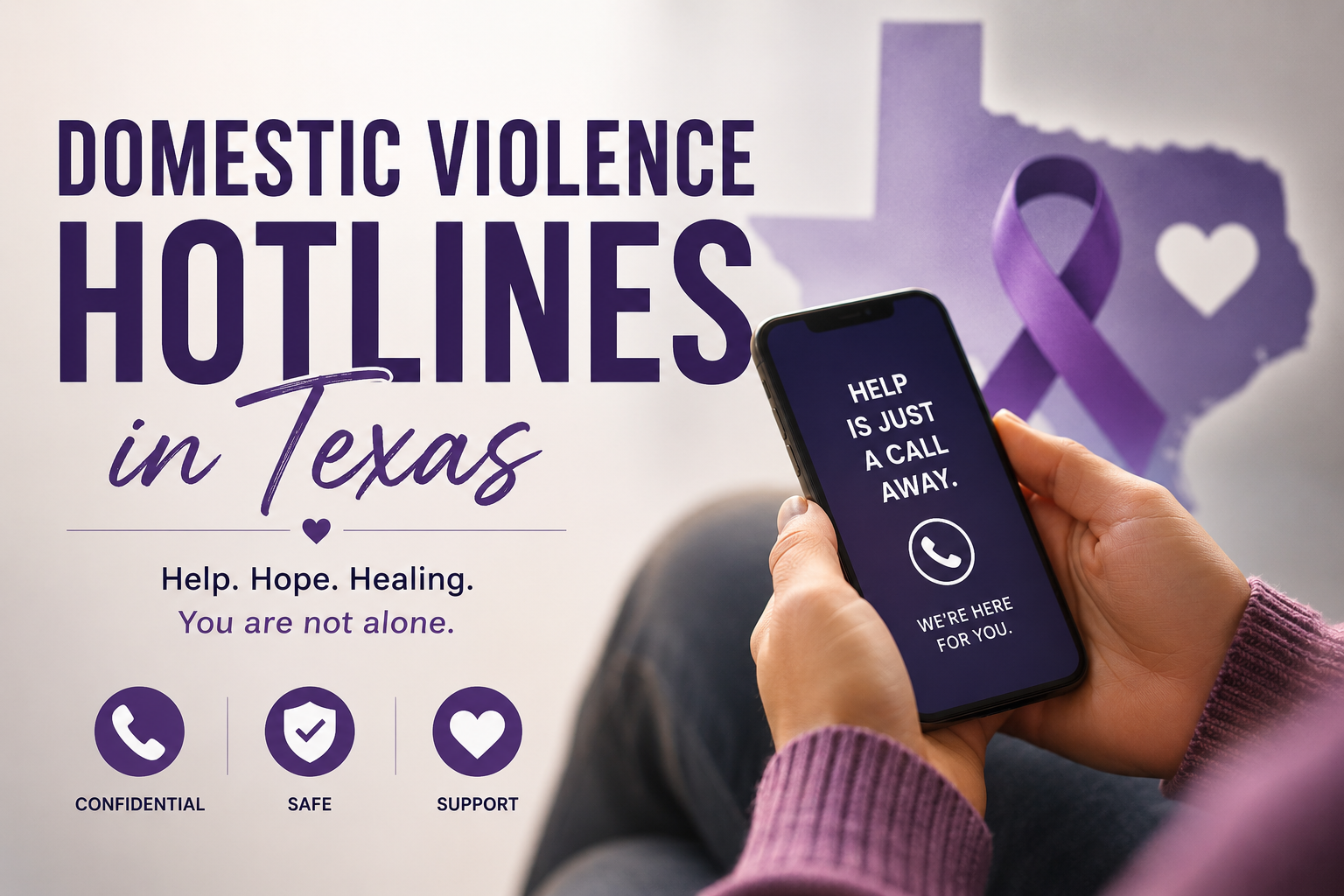
Domestic violence affects individuals and families in every community across Texas. It can occur regardless of age, income, education, ethnicity, gender, or relationship status. While many people associate domestic violence with physical abuse, it can also involve emotional manipulation, coercive control, threats, stalking, financial abuse, sexual violence, and psychological intimidation.
For victims experiencing abuse, knowing where to find help can be life-changing, and in some situations, life-saving. If you or someone you know is experiencing domestic violence, it is important to remember one thing; You are not alone, and help is available.
Texas has a statewide network of hotlines, shelters, legal aid organizations, advocacy groups, and emergency services dedicated to helping survivors find safety, support, and resources.
This guide explains the most important domestic violence hotlines in Texas, what services they provide, when to call them, and how they can help.
What Is Domestic Violence?
Domestic violence refers to a pattern of abusive behavior used to gain or maintain power and control over another person in a relationship. Abuse may include:
- Physical violence
- Emotional abuse
- Psychological manipulation
- Sexual abuse
- Financial control
- Intimidation
- Threats
- Stalking
- Digital monitoring and harassment
Domestic violence can occur between:
- Spouses
- Dating partners
- Former partners
- Family members
- Household members
Many victims experience multiple forms of abuse simultaneously.
If You’re in Immediate Danger
If you believe you are in immediate danger or fear for your safety: Call 911 immediately.
Emergency responders can provide urgent assistance and connect victims with additional resources.
National Domestic Violence Hotline
The National Domestic Violence Hotline serves victims across Texas and the United States.
Contact Information
800-799-SAFE (7233)
Text START to 88788
Online chat available through The Hotline website
Available 24 Hours a Day, 7 Days a Week
Services Provided
- Crisis intervention
- Safety planning
- Shelter referrals
- Emotional support
- Information about local resources
- Multilingual assistance
Calls are confidential, and advocates are trained to specially by organizations like the Texas Council on Family Violence to assist individuals experiencing abuse.
Texas Council on Family Violence (TCFV)
The Texas Council on Family Violence is the state’s leading organization dedicated to supporting survivors and strengthening domestic violence services across Texas.
While TCFV does not operate a crisis hotline directly, it maintains a statewide directory of domestic violence service providers and shelters.
Contact Information
📞 888-450-TCFV (8238)
Statewide service directory available online; Texas Council on Family violence.
Services
- Shelter referrals
- Local program directory
- Advocacy resources
- Education and prevention information
- Connections to community-based support programs
TCFV works with domestic violence organizations across Texas (like WomensLaw.org) to help survivors find local assistance.
Texas Advocacy Project
Many survivors need legal assistance in addition to emergency support. Texas Advocacy Project provides free legal services to eligible survivors of:
- Domestic violence
- Dating violence
- Sexual assault
- Stalking
Contact Information
📞 800-374-HOPE (4673)
Services Include
- Protective orders
- Child custody assistance
- Divorce assistance
- Legal advocacy
- Safety planning support
For survivors navigating the legal system, these services can be invaluable.
Love Is Respect

Young adults and teenagers experiencing relationship abuse often face unique challenges. Love Is Respect specializes in helping individuals between the ages of 13 and 26.
Contact Information
📞 866-331-9474. They are available 24/7
Services
- Relationship abuse support
- Dating violence resources
- Safety planning
- Text and chat support
Young people often contact Love Is Respect when they are unsure whether their relationship behavior is healthy or abusive.
Domestic Violence by the Numbers in Texas
Domestic violence remains a significant public safety and public health issue throughout the state. According to recent Texas family violence service data:
- Approximately 5,493 survivors receive support from Texas domestic violence programs each month
- About 1,848 hotline contacts occur in a single day, averaging roughly 77 contacts every hour
- 51% of survivors seeking shelter are turned away due to lack of available space
- 87.7% of survivors report feeling safe or very safe during or after receiving shelter services
These statistics demonstrate both the scale of the problem and the critical role support organizations play in helping survivors.
Warning Signs of Domestic Violence
Abuse is not always physical. Common warning signs include:
• Extreme jealousy
• Constant monitoring
• Isolation from friends and family
• Financial control
• Threats or intimidation
• Frequent humiliation
• Controlling behavior
• Stalking or unwanted surveillance
Destruction of personal property
Physical violence or threats of violence
Recognizing these signs early can help victims seek support before situations escalate.
Creating a Safety Plan
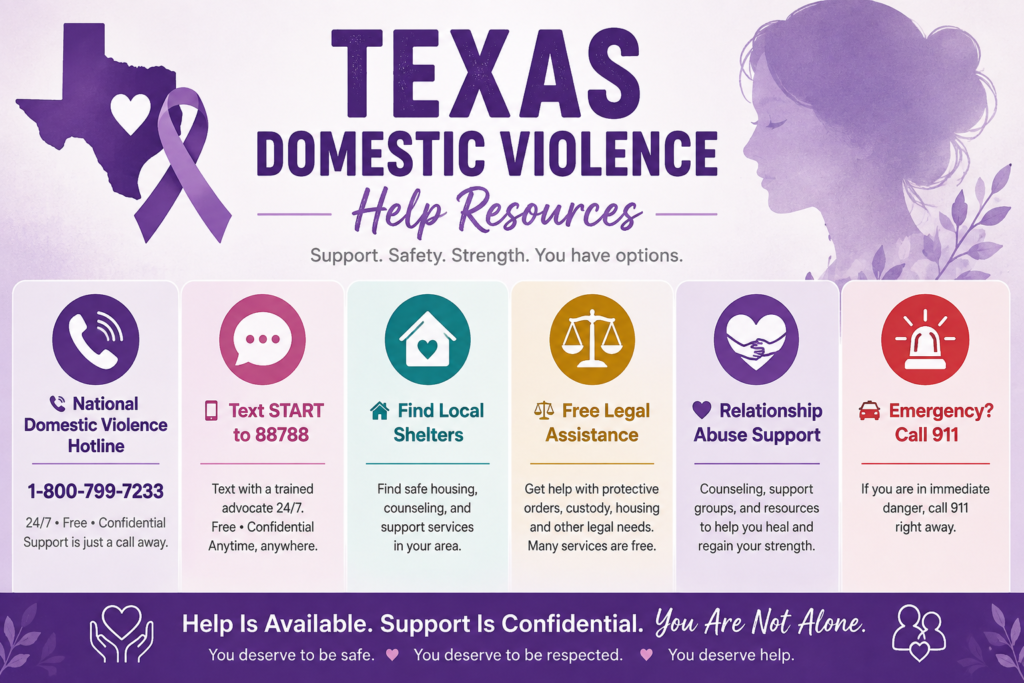
For individuals experiencing abuse, safety planning can be an important step. A safety plan may include:
• Identifying trusted contacts
• Keeping important documents accessible
• Establishing emergency escape routes
Memorizing emergency phone numbers
• Creating a code word with family or friends
• Identifying safe places to go if immediate departure becomes necessary
Advocates can help survivors develop personalized safety plans based on their circumstances.
How to Help Someone Experiencing Abuse
If someone confides in you about abuse:
• Listen without judgment
• Believe their experiences
• Respect their decisions
• Encourage professional support
• Provide hotline information
• Help create a safety plan if requested
Avoid pressuring them to leave immediately, as leaving an abusive relationship can sometimes increase danger if not done safely.
Frequently Asked Questions
Is domestic violence only physical abuse?
No. Emotional, psychological, financial, sexual, and digital abuse can all be forms of domestic violence.
Can men be victims of domestic violence?
Yes. Domestic violence can affect people of any gender.
Are hotline calls confidential?
Most domestic violence hotlines provide confidential support and safety-focused assistance.
What if I don’t want to leave immediately?
Advocates can help create a safety plan even if you are not ready to leave the relationship.
Final Thoughts
Domestic violence is a serious issue that affects thousands of Texans every year, but survivors do not have to face it alone. Across the state, trained advocates, shelters, legal professionals, and support organizations work every day to help individuals and families find safety, stability, and hope.
Whether someone needs emergency assistance, legal guidance, shelter services, or simply someone to talk to, resources are available. Reaching out for help can feel overwhelming, but it is often the first step toward greater safety and long-term recovery.
If you or someone you know is experiencing abuse, remember that support is available 24 hours a day. A single phone call can connect survivors to the information, protection, and assistance they need to begin moving forward.