Imagine waking up one morning to discover that someone has opened a credit card in your name, taken out a loan using your personal information, or drained money from your bank account, all without ever meeting you. For millions of people every year, this isn’t a hypothetical scenario. It’s identity theft.
Identity theft has become one of the fastest-growing crimes in the digital age. As more of our lives move online, from banking and shopping to healthcare and social media, the amount of personal information available to criminals has grown dramatically. Today, a thief doesn’t need to steal your wallet to steal your identity. In many cases, all they need is a few pieces of personal information and an opportunity.
The consequences can range from unauthorized purchases and damaged credit scores to legal complications and years of financial recovery. Yet despite how common identity theft has become, many people don’t fully understand what it is, how it happens, or how to protect themselves.
This guide will break down everything you need to know about identity theft: what it is, how criminals steal identities, warning signs to watch for, the different types of identity theft, what to do if you become a victim, and practical steps you can take to protect yourself.
What Is Identity Theft?
Identity theft occurs when someone uses another person’s personal information without permission to commit fraud or other crimes. The stolen information may include:
- Full name
- Date of birth
- Social Security Number
- Driver’s license information
- Bank account details
- Credit card numbers
- Email addresses
- Login credentials
- Medical insurance information
Criminals use this information to impersonate victims for financial gain or other illegal activities. Identity theft is simply the act of stealing and using someone else’s identity for personal benefit.
Why Identity Theft Is Such a Serious Crime
Unlike a stolen television or smartphone, identity theft can continue causing damage long after the initial theft occurs. Victims may face:
- Financial losses
- Damaged credit scores
- Loan application denials
- Fraudulent accounts
- Tax fraud complications
- Medical record issues
- Emotional stress
- Time-consuming recovery processes
In severe cases, victims spend months or even years repairing the damage.
How Common Is Identity Theft?

Source: Most common types of identity theft according to enterpriseapp today.
Identity theft affects millions of Americans every year, according to consumer protection and fraud reporting agencies, identity theft consistently ranks among the most frequently reported forms of fraud in the United States.
How Identity Theft Happens
Many people imagine hackers breaking into sophisticated computer systems. In reality, identity theft often begins with surprisingly simple methods.
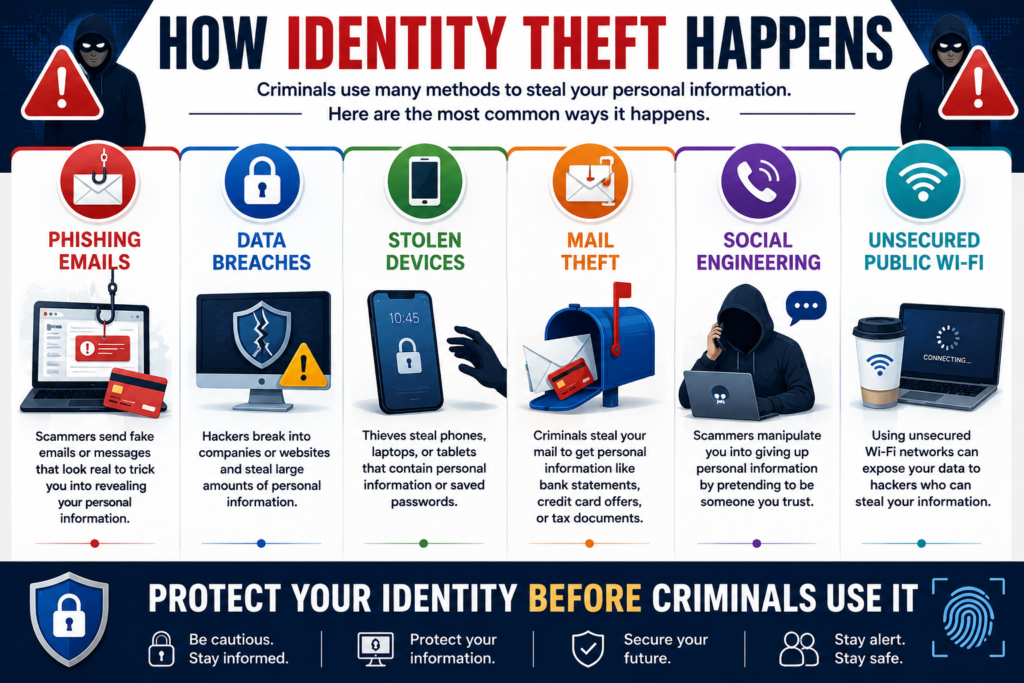
Phishing Scams
Criminals send emails, texts, or messages pretending to be:
- Banks
- Government agencies
- Delivery companies
- Employers
Their goal is to trick victims into revealing sensitive information.
Data Breaches
Companies store enormous amounts of customer information. When databases are breached, criminals may gain access to:
- Passwords
- Email addresses
- Phone numbers
- Financial information
Stolen data is often sold on underground marketplaces.
Social Engineering
Rather than attacking systems, criminals manipulate people. Examples include:
- Fake customer service calls
- Impersonating technical support
- Pretending to be government officials
Many successful identity theft cases begin with social engineering.
Public Wi-Fi Attacks
Unsecured networks can expose information when users access sensitive accounts without proper protection.
Stolen Devices
Lost or stolen phones, laptops, and tablets may contain valuable personal information.
Mail Theft
Physical mail can still be a valuable source of:
- Bank statements
- Tax forms
- Insurance documents
- Credit card offers
Types of Identity Theft
Identity theft is not always a single crime. In many cases, criminals use stolen information in multiple ways, committing several forms of fraud against the same victim over time. Depending on the information obtained, a thief may target a person’s finances, healthcare records, tax filings, employment history, or even their child’s identity.

Understanding the different types of identity theft can help you recognize warning signs earlier and take steps to protect yourself.
1.Financial Identity Theft
This is the most common form of identity theft. Criminals use stolen personal or financial information to gain access to a victim’s money or financial resources. Common examples include:
- Opening new accounts
- Making unauthorized purchases
- Applying for loans
- Accessing bank accounts
- Conducting fraudulent transactions
Financial identity theft often causes immediate financial losses and may take months to fully resolve.
2.Credit Identity Theft
Credit identity theft occurs when fraudsters use stolen information to open new credit accounts in a victim’s name. This may include:
- Credit cards
- Personal loans
- Store financing accounts
- Lines of credit
Because bills and statements are often sent to different addresses, victims may not discover the fraud until they check their credit reports or receive debt collection notices.
3.Medical Identity Theft
In this type of identity theft, a criminal uses someone else’s health insurance, medical records, or personal information to obtain healthcare services, prescription medications, or medical equipment.
Beyond financial consequences, medical identity theft can be particularly dangerous because it may result in inaccurate information being added to a victim’s medical records, potentially affecting future treatment.
4.Tax Identity Theft
Tax identity theft occurs when criminals use a victim’s personal information to file fraudulent tax returns and claim refunds before the legitimate taxpayer files.
Victims often discover the fraud when tax authorities reject their return or notify them that a return has already been submitted under their name.
5.Employment Identity Theft
Employment identity theft happens when someone uses another person’s identity to secure a job or pass employment background checks.
In some cases, victims may later encounter tax complications or employment record discrepancies because income was reported under their identity without their knowledge.
6.Child Identity Theft
Children are attractive targets because their identities are rarely monitored and often remain unused for many years. Criminals may use a child’s Social Security number or personal information to:
- Open credit accounts
- Obtain loans
- Apply for benefits
- Commit financial fraud
Many victims do not discover the theft until they become adults and attempt to apply for credit themselves.
7.Criminal Identity Theft
This lesser-known form of identity theft occurs when a person provides someone else’s name or personal information to law enforcement during an arrest or investigation.
As a result, the victim may face legal complications, inaccurate criminal records, or difficulties proving their identity until the issue is corrected.
8.Synthetic Identity Theft
One of the fastest-growing forms of identity fraud, synthetic identity theft involves combining real and fake information to create an entirely new identity.
For example, a criminal may use a legitimate Social Security number together with a fake name, date of birth, or address to build a fraudulent identity that can be used to open accounts and obtain credit over time.
While each type of identity theft operates differently, they all share a common goal: exploiting personal information for financial gain or other criminal purposes. Understanding these categories makes it easier to spot suspicious activity and respond before significant damage occurs.
Warning Signs of Identity Theft
Early detection can significantly reduce damage. Watch for:
•Unexpected Financial Transactions; Charges you don’t recognize.
•Credit Report Changes; New accounts or inquiries you didn’t authorize.
•Missing Bills or Statements; Mail theft may be occurring.
•Debt Collection Calls; For debts you don’t owe.
•Rejected Applications; Unexpected denials for credit or services.
•Account Login Alerts; Notifications from unfamiliar locations or devices.
What Criminals Do With Stolen Identities
Stolen identities are very valuable and important to criminals, as they can use and reuse them in various degrading and demeaning ways which includes (but are not limited to):
- Open credit cards
- Apply for loans
- Commit tax fraud
- Rent property
- Purchase vehicles
- Access healthcare services
- Conduct money laundering activities
Some identities are sold multiple times, causing repeated victimization.
How to Protect Yourself From Identity Theft
While no prevention strategy is perfect, several practices dramatically reduce risk.
Use Strong Passwords: Avoid reusing passwords across accounts. Use a password manager whenever possible.
Enable Multi-Factor Authentication (MFA): MFA adds a second layer of protection beyond passwords.
Monitor Financial Accounts: Regularly review:
- Bank statements
- Credit card transactions
- Credit reports
Be Careful With Personal Information: Don’t share sensitive information unless necessary.
Avoid Suspicious Links: Verify unexpected emails and messages before clicking.
Secure Your Devices: Keep software updated and use device security features.
Shred Sensitive Documents: Dispose of documents containing personal information securely.
What To Do If Your Identity Is Stolen
If you suspect that your identity has been stolen or someone somewhere might have used your personal information workout your concent, do these imeediately:
Step 1: Act Quickly
The faster you respond, the less damage can occur.
Step 2: Contact Financial Institutions
Report unauthorized activity immediately.
Step 3: Change Passwords
Update credentials for affected accounts.
Step 4: Place Fraud Alerts
Consider adding alerts to your credit file.
Step 5: Document Everything
Keep records of communications and recovery steps.
Step 6: Report the Incident
File reports with relevant agencies and institutions.
Identity Theft Prevention Checklist
✓ Use unique passwords
✓ Enable MFA
✓ Monitor financial accounts
✓ Review credit reports
✓ Protect personal documents
✓ Verify suspicious communications
✓ Secure devices and networks
✓ Stay informed about emerging scams
In Summary
Identity theft is more than just a financial crime, it is a personal crime that can affect nearly every aspect of a victim’s life. From damaged credit and financial losses to legal complications and emotional stress, the consequences can linger long after the initial theft occurs. As criminals continue to exploit technology, data breaches, and social engineering tactics, understanding how identity theft works has become an essential part of modern digital literacy.
The good news is that awareness remains one of the most effective defenses. By recognizing common identity theft schemes, monitoring your accounts regularly, using strong security practices, and acting quickly when something seems suspicious, you can significantly reduce your risk of becoming a victim. While no system offers complete protection, informed and proactive individuals are far better equipped to detect threats early and limit the damage if an incident occurs.
Ultimately, protecting your identity should be viewed the same way you view protecting your home, vehicle, or finances, not as a one-time task, but as an ongoing habit. The more attention you give to safeguarding your personal information today, the less likely you are to face the costly and frustrating consequences of identity theft tomorrow.