Human trafficking is one of the most misunderstood crimes in the world. Many people imagine dramatic kidnappings, secret operations, or scenarios that only happen in movies. While such cases do occur, the reality is often far more complex, and far more common than most people realize.
Human trafficking can happen in large cities, small towns, affluent neighborhoods, workplaces, schools, online platforms, and even within familiar social circles. Victims may be adults or children, citizens or immigrants, men or women. In many cases, traffickers use manipulation, deception, coercion, or abuse of vulnerability rather than physical force alone. Because trafficking often operates in plain sight, recognizing the warning signs is one of the most important steps in preventing exploitation and helping victims get assistance.
In this guide, you’ll learn what human trafficking is, how traffickers operate, common warning signs, risk factors, myths and misconceptions, and what to do if you suspect someone may be a victim.
What Is Human Trafficking?
Human trafficking is the exploitation of people through force, fraud, coercion, or manipulation for the purpose of labor, services, or commercial sexual exploitation.
In simple terms: Human trafficking occurs when a person is controlled and exploited for someone else’s financial or personal gain.
Trafficking is a crime against a person’s freedom, dignity, and basic human rights. Unlike human smuggling, which generally involves the illegal transportation of people across borders, human trafficking focuses on exploitation and can occur even when no travel or border crossing is involved.
The Two Main Types of Human Trafficking
Labor Trafficking: Labor trafficking occurs when individuals are forced, deceived, or coerced into working against their will. Victims may be found in:
- Agriculture
- Construction
- Domestic work
- Manufacturing
- Hospitality
- Restaurants
- Cleaning services
Victims are often subjected to poor working conditions, withheld wages, threats, intimidation, or restrictions on their freedom.
Sex Trafficking: Sex trafficking involves the exploitation of individuals for commercial sexual activities through force, fraud, coercion, or manipulation. Victims may be controlled through:
- Threats
- Violence
- Emotional abuse
- Debt manipulation
- Isolation
- Psychological control
For minors, any commercial sexual exploitation is generally considered trafficking regardless of whether force or coercion can be proven.
Why Human Trafficking Is Difficult to Detect
One reason trafficking is so challenging to combat is that it often does not look like what people expect. Victims may:
- Appear fearful or anxious
- Avoid eye contact
- Be accompanied by controlling individuals
- Be unable to speak freely
- Show signs of physical or emotional abuse
Many victims do not identify themselves as victims due to fear, manipulation, shame, threats, or dependence on the trafficker.
Common Recruitment Tactics Used by Traffickers
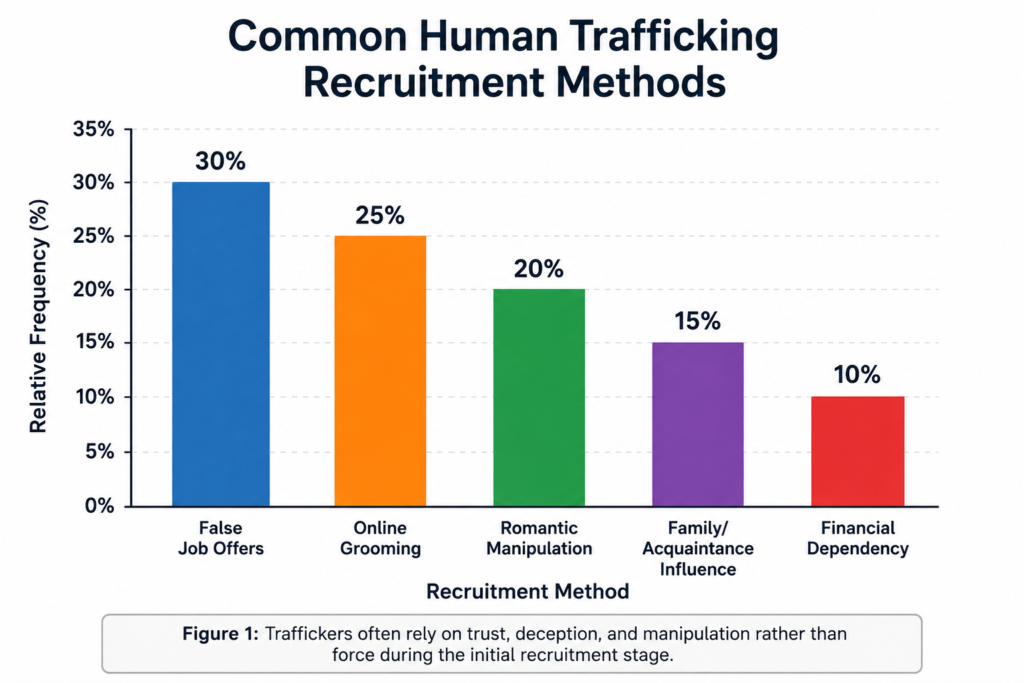
Traffickers often build trust before exploiting victims. Common tactics include:
1. False Job Opportunities: Promises of high-paying jobs, modeling careers, or employment abroad.
2. Romantic Manipulation: Sometimes called the “lover-boy” method, where traffickers form emotional relationships to gain control.
3.Financial Assistance: Offering money, housing, transportation, or support before creating dependency.
4. Online Grooming: Using social media, gaming platforms, messaging apps, and online communities to build relationships with potential victims.
Warning Signs of Human Trafficking
Recognizing warning signs does not automatically confirm trafficking, but multiple indicators may warrant concern.
Behavioral Signs
- Fearful or submissive behavior
- Anxiety around certain individuals
- Inconsistent explanations of circumstances
- Reluctance to speak openly
- Signs of intimidation
Physical Sign
- Unexplained injuries
- Signs of neglect
- Malnutrition
- Poor living conditions
- Exhaustion
Situational Signs
- Restricted movement
- Someone else controlling identification documents
- Lack of access to personal finances
- Excessive work hours
- Living where they work under unusual conditions
Who Is Most Vulnerable?
Human trafficking can affect people of any age, gender, nationality, race, or socioeconomic background. However, traffickers often look for individuals who may be experiencing difficult circumstances or who have unmet emotional, financial, or social needs that can be exploited.
Certain factors can increase a person’s vulnerability, including:
- Economic hardship and financial insecurity
- Homelessness or unstable housing
- Family conflict or instability
- Previous experiences of abuse or neglect
- Substance dependency
- Social isolation or loneliness
- Runaway or homeless youth
- Lack of strong support networks
- Language barriers
- Undocumented or uncertain immigration status
What makes these circumstances significant is that traffickers frequently present themselves as problem-solvers. They may offer jobs, housing, financial assistance, emotional support, romantic relationships, or opportunities that appear to provide a way out of a difficult situation. Once trust has been established, that support can gradually turn into manipulation, control, and exploitation.
Young people are often considered particularly vulnerable because they may be more likely to seek acceptance, independence, employment opportunities, or relationships online. Social media platforms, messaging apps, and online communities have made it easier for traffickers to identify and contact potential victims, sometimes spending weeks or months building trust before exploitation begins.
It is also important to understand that vulnerability does not equal weakness. Many trafficking victims are hardworking, intelligent, and resilient individuals who were targeted during a challenging period in their lives. Traffickers are skilled manipulators who deliberately exploit circumstances, emotions, and trust to gain control.
The key takeaway is that awareness and strong support systems matter. Individuals who have access to trusted family members, friends, mentors, community organizations, and verified opportunities are often better positioned to recognize warning signs and avoid situations that could lead to exploitation. Understanding these risk factors can help people protect themselves and identify when someone around them may need help or support.
Human Trafficking in the Digital Age
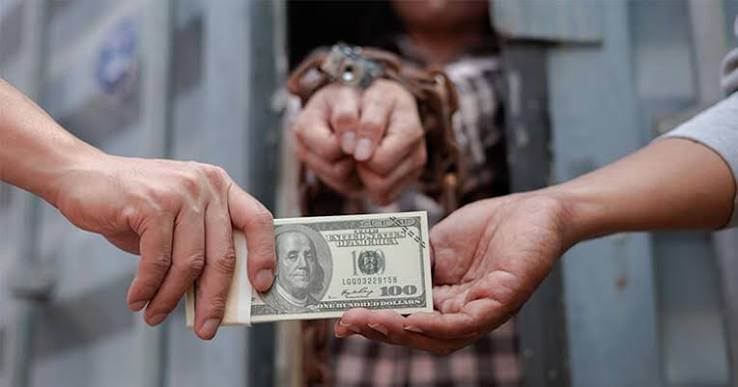
The rise of the internet and social media has transformed many aspects of daily life, including how traffickers identify, contact, and exploit potential victims. While technology has created valuable opportunities for communication and connection, it has also provided criminals with new ways to operate and reach vulnerable individuals.
Online platforms may be used for:
- Recruitment
- Grooming and relationship-building
- Advertising victims
- Communication and coordination
- Financial transactions
Traffickers often take advantage of social media, messaging apps, online gaming communities, and job websites to initiate contact. In many cases, they spend time building trust, offering emotional support, friendship, romance, or seemingly attractive opportunities before attempting to gain influence or control.
This is why digital awareness has become an important part of trafficking prevention. Being cautious about who you interact with online, verifying job offers and opportunities, protecting personal information, and recognizing manipulative behavior can help reduce the risk of online exploitation. As trafficking methods continue to evolve, understanding how criminals use technology is increasingly important for staying safe both online and offline.
Common Myths About Human Trafficking
1.Myth: Human trafficking always involves kidnapping.
Reality: Many trafficking cases begin through deception, manipulation, or abuse of trust.
2.Myth: It only affects women and girls.
Reality: Men, women, and children can all become victims.
3.Myth: Human trafficking only happens internationally.
Reality: Many trafficking cases occur within a victim’s own country or community.
4.Myth: Victims can simply leave.
Reality: Fear, threats, financial dependency, psychological control, and isolation often make leaving extremely difficult.
What To Do If You Suspect Human Trafficking
If you suspect someone may be a victim:
• Do not attempt to confront suspected traffickers yourself.
• Prioritize personal safety.
• Document relevant observations if safe to do so.
• Contact appropriate law enforcement or trafficking hotlines.
• Report concerns to trained professionals.
Human trafficking investigations require specialized handling to protect victims and gather evidence safely.
Prevention Tips
1. Stay Cautious of Unrealistic Opportunities: Be wary of offers that seem too good to be true.
2. Verify Employment Opportunities: Research employers and organizations before accepting jobs.
3. Protect Personal Information Online: Avoid sharing sensitive details with strangers.
4. Teach Online Safety: Help young people understand online grooming risks.
5.Maintain Strong Support Networks: Healthy relationships and trusted support systems can reduce vulnerability.

How Many People Are Affected by Human Trafficking Worldwide?
Human trafficking and modern slavery remain among the largest human rights challenges of our time, affecting millions of people across the globe.
According to estimates from the International Labor Organization(ILO), approximately 49.6 million people are living in conditions of modern slavery on any given day. This figure includes two major categories:
- 27.6 million people in forced labor
- 22 million people in forced marriage
The distinction is important because some reports focus solely on forced labor and therefore cite the lower figure of 27.6 million. However, when forced marriage is included, the broader estimate rises to 49.6 million people, providing a more complete picture of the scale of exploitation occurring worldwide.
These statistics highlight a troubling reality: human trafficking is not a rare or isolated crime. It affects individuals across different countries, industries, age groups, and socioeconomic backgrounds, often operating in ways that remain hidden from public view.
Adding to the concern, the United Nations Office on Drugs and Crime (UNODC) reported a significant increase in detected trafficking cases in recent years. In 2025, the number of identified trafficking victims was approximately 25% higher than pre-pandemic levels recorded in 2021. Particularly alarming was the rise in child victims, which increased by 31% during the same period.
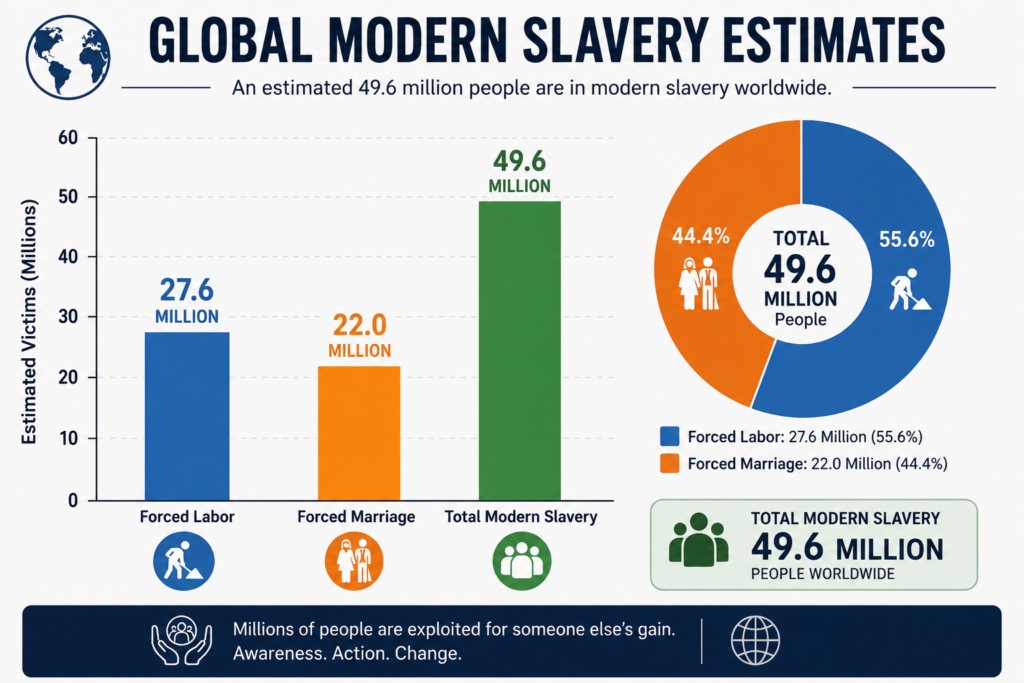
An estimated 49.6 million people worldwide are living under conditions of modern slavery, including forced labor and forced marriage.
The data makes one thing clear: human trafficking is not a declining problem. Despite increased awareness and enforcement efforts, traffickers continue to exploit vulnerable individuals at an alarming scale. Understanding the scope of the issue is an important first step toward recognizing its impact and supporting efforts aimed at prevention, victim protection, and accountability.
How Human Trafficking Affects Texas
While human trafficking is a global problem, it is also a significant concern within Texas. Due to its large population, extensive transportation networks, international border connections, major metropolitan areas, and thriving economy, Texas has long been identified as one of the states where trafficking activity is most frequently reported and investigated.
It’s important to understand that trafficking in Texas is not confined to any single city, region, or demographic group. Cases have been identified in large urban centers such as Houston, Dallas, San Antonio, Austin, and Fort Worth, as well as in smaller communities throughout the state. Victims may include adults and children, U.S. citizens and non-citizens, men and women, and individuals from a wide range of backgrounds.
Several factors contribute to Texas’ vulnerability to trafficking activity:
- Major interstate highways that facilitate movement across the state
- International trade and border crossings
- Large population centers
- High-volume tourism and hospitality industries
- Significant labor sectors such as agriculture, construction, and service industries
- Widespread internet and social media usage that can facilitate online recruitment
Law enforcement agencies, advocacy organizations, and victim service providers across Texas continue to work together to identify victims, prosecute traffickers, and increase public awareness. However, experts emphasize that many cases still go unreported, meaning the true scope of the problem is likely larger than official statistics indicate.
Human Trafficking Reports in Texas
Texas consistently ranks among the states with the highest number of human trafficking reports received by national reporting and assistance organizations. While reporting numbers do not necessarily reflect the total number of trafficking cases, they do indicate that the issue remains a significant public safety and human rights concern throughout the state.
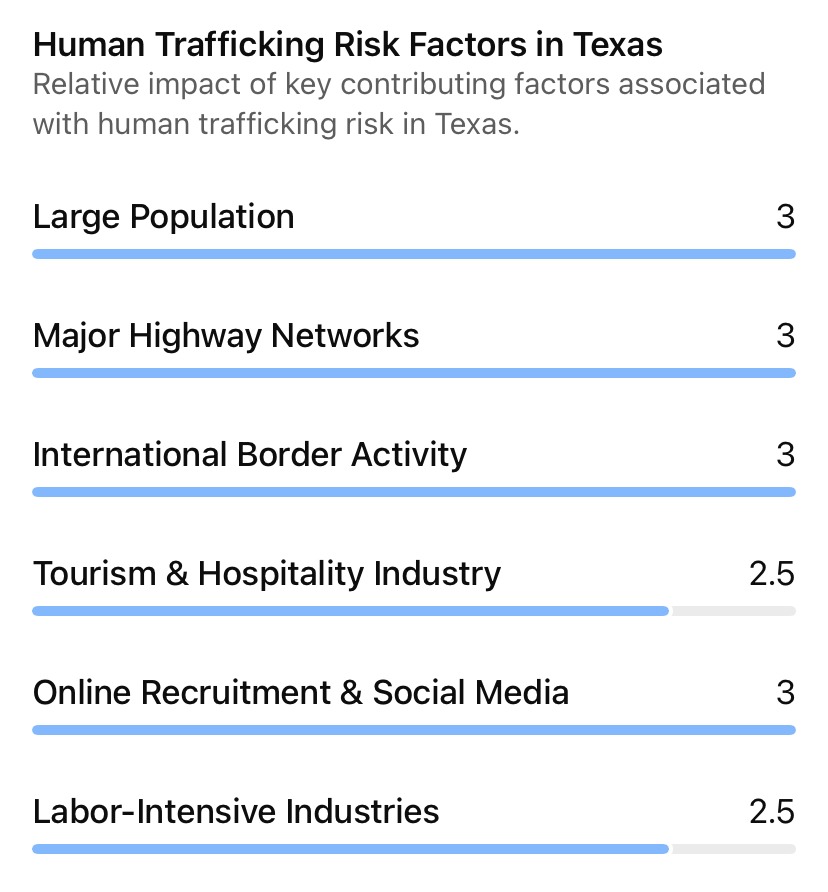
Multiple economic, geographic, and technological factors contribute to the trafficking risks faced by Texas communities.
Why Awareness Matters in Texas
One of the biggest misconceptions is that human trafficking only happens in hidden locations or organized criminal networks. In reality, cases may occur in neighborhoods, workplaces, hotels, transportation hubs, online platforms, or other environments people encounter every day.
For Texans, awareness plays a critical role in prevention. Recognizing warning signs, understanding how traffickers recruit and control victims, and knowing how to report concerns can help communities identify potential cases earlier and support those who may be at risk.
The key takeaway is that human trafficking is not just a global issue, it is a Texas issue as well. While the state continues to strengthen prevention and enforcement efforts, informed citizens remain one of the most important resources in identifying trafficking activity and helping protect vulnerable individuals from exploitation.
Final Thoughts
Human trafficking is a serious crime that affects individuals, families, and communities around the world. While it can take many forms, a common thread runs through every case: the exploitation of vulnerable people for someone else’s gain. Understanding how trafficking works is the first step toward recognizing and preventing it.
One of the most important lessons is that trafficking does not always involve dramatic abductions or obvious signs of abuse. More often, it relies on manipulation, deception, coercion, and the exploitation of trust. This is why awareness, education, and vigilance remain essential tools in combating crime.
By learning the warning signs, staying informed about common recruitment tactics, and knowing how to report concerns safely, individuals can play a meaningful role in protecting themselves and others. In many cases, recognizing a few seemingly small indicators can be the difference between continued exploitation and a victim receiving the help they need.