Crime is one of the most discussed public safety topics in Texas. Whether it’s a local neighborhood theft, a high-profile violent crime case, or concerns about rising vehicle thefts, Texans often want to know a simple question: Is crime getting better or worse? Well, the answer just might be more complex than many headlines suggest.
Over the last decade, Texas has experienced significant changes in crime patterns. Some categories of crime have declined, continuing long-term national trends that began years ago. Other offenses, particularly certain forms of property crime, cybercrime, fraud, and vehicle theft, have evolved alongside changes in technology, economic conditions, and population growth.
At the same time, Texas itself has changed dramatically. The state’s population has grown by millions of residents, major metropolitan areas have expanded, and new technologies have altered how people live, work, shop, and communicate. These changes influence both crime opportunities and crime prevention efforts. Understanding long-term trends is important because isolated incidents rarely tell the full story. A single year may show an increase or decrease in reported crime, but examining a decade of data provides a clearer picture of how public safety is evolving across the state.
In this article, we’ll explore how crime has changed in Texas over the past ten years, examine major trends in violent and property crime, discuss the rise of cyber-enabled offenses, and look at what these changes mean for residents moving forward.
Why Looking at Long-Term Crime Trends Matters
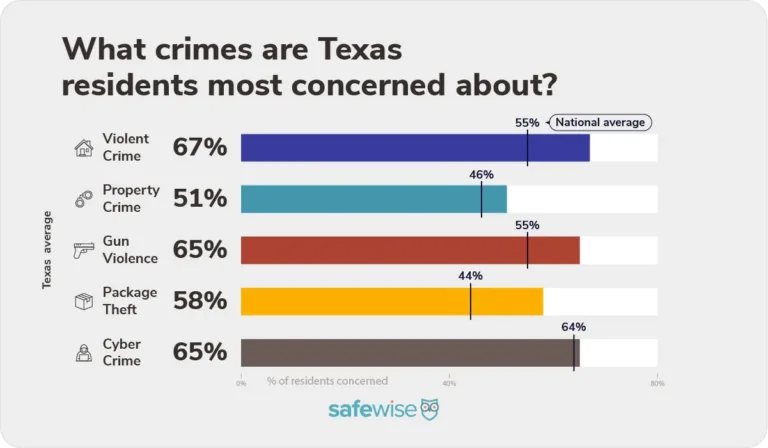
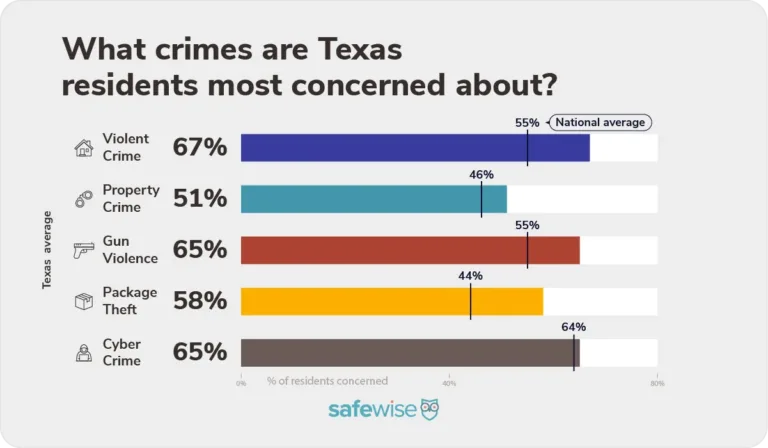
Source: Texas crime trend according to Safewise
Crime statistics can be misleading when viewed in isolation. For example:
- A city may experience a temporary increase in one category of crime.
- A single year may be influenced by economic events or reporting changes.
- Population growth can increase total incidents even when crime rates decline.
This is why criminologists often focus on long-term trends and crime rates per 100,000 residents rather than raw incident totals. Long-term analysis helps answer questions such as:
- Are communities becoming safer?
- Which crimes are increasing?
- Which crimes are decreasing?
- Where should prevention efforts be focused?
Texas Has Grown Rapidly Over the Last Decade
Before discussing crime, it’s important to understand population growth. Texas has been one of the fastest-growing states in the country. Population growth affects crime statistics because:
- More residents create more opportunities for crime.
- More vehicles are on the road.
- More homes require protection.
- More online activity creates additional cybercrime risks.
Because of this, crime rates often provide a more accurate picture than total crime counts.
Violent Crime: A Mixed but Generally Stable Picture
Violent crime includes offenses such as:
- Murder and non-negligent manslaughter
- Robbery
- Aggravated assault
- Sexual assault
Over the last decade, Texas has generally experienced fluctuations rather than a continuous upward or downward trend. Several cities saw increases during specific periods, particularly around the early 2020s, while other years showed stabilization or declines.
| Year | Relative Violent Crime Index |
| 2016 | 100 |
| 2017 | 96 |
| 2019 | 94 |
| 2021 | 108 |
| 2023 | 101 |
| 2026 | 98 |
Figure 1: Illustrative trend showing fluctuations in violent crime over the last decade. Actual rates vary by reporting year and jurisdiction.
While violent crime remains a major concern, it represents a relatively small portion of overall reported criminal activity compared to property crime.
Property Crime Has Generally Declined
One of the most significant long-term trends in Texas has been the gradual decline of many traditional property crimes. Property crime includes:
- Burglary
- Theft
- Larceny
- Motor vehicle theft
- Vandalism
Improved security technology has likely contributed to this trend. Examples include:
- Home security systems
- Smart doorbells
- Vehicle immobilizers
- Surveillance cameras
- GPS tracking
As a result, many communities report lower burglary rates today than they did a decade ago.
Vehicle Theft Became a Growing Concern

While many property crimes declined, vehicle theft emerged as a major challenge in recent years. Contributing factors include:
Electronic Vehicle Theft: Criminals increasingly target vehicles using technology-based methods.
Organized Theft Networks: Some theft operations involve coordinated groups that transport or resell stolen vehicles.
High Vehicle Demand: Supply chain disruptions and vehicle shortages increased the value of used vehicles during certain periods.
As a result, vehicle theft became one of the fastest-growing crime categories in many jurisdictions.
Cybercrime Has Changed the Crime Landscape
Perhaps the biggest crime-related shift over the last decade has occurred online. Ten years ago, most people worried primarily about physical crimes. Today, many threats occur digitally. Examples include:
- Identity theft
- Phishing scams
- Financial fraud
- Account takeovers
- Online marketplace scams
- Business email compromise
Cybercriminals can now target victims across Texas without ever entering the same city, or even the same country.

Fraud and Identity Theft Continue to Rise
As more financial activity moves online, fraud has become a growing concern. Common examples include:
Phone Scams: Criminals impersonate government agencies, banks, or businesses.
Credit Card Fraud: Stolen payment information is used to make unauthorized purchases.
Identity Theft: Personal information is used to open accounts or commit financial crimes.
Online Shopping Fraud: Fake websites and fraudulent sellers target online shoppers.
For many Texans, fraud now represents a more likely threat than traditional burglary.
Technology Has Changed Both Crime and Crime Prevention
Technology has created new opportunities for criminals, but it has also improved crime prevention.
Crime Prevention Technologies
- Smart cameras
- Home automation systems
- Vehicle tracking systems
- Digital payment protections
- Multi-factor authentication
Crime Investigation Technologies
- DNA analysis
- License plate readers
- Digital forensics
- Surveillance systems
Law enforcement agencies now have access to investigative tools that were far less common a decade ago.
Most Significant Crime Trends of the Last Decade
1. Declining Burglary Rates: Many communities report fewer residential burglaries than in previous years.
2. Increased Cybercrime: Digital threats continue to expand.
3. Rising Vehicle Theft Concerns: Vehicle theft became a major public safety issue.
4. Growth of Online Fraud: Scams increasingly target individuals through email, text messages, and social media.
5. Greater Use of Security Technology: Residents and businesses are investing more heavily in prevention.
Crime Trends in Texas
| Crime Category | 2016 Index | 2026 Index |
| Burglary | 100 | 70 |
| Theft/Larceny | 100 | 82 |
| Vehicle Theft | 100 | 125 |
| Cybercrime | 100 | 240 |
| Identity Theft | 100 | 210 |
| Fraud Scams | 100 | 195 |
Figure 2: Traditional property crimes generally declined over the last decade, while cybercrime, identity theft, and fraud-related offenses expanded significantly.
What These Trends Mean for Texans
The biggest lesson from the last decade is that crime is evolving. Many traditional crimes remain important concerns, but modern risks increasingly involve:
- Digital fraud
- Online scams
- Identity theft
- Cybersecurity threats
Protecting yourself today requires both physical security and digital awareness.Residents should focus on:
• Home security
• Vehicle protection
• Password security
• Fraud awareness
• Safe online behavior
Final Thoughts
Crime in Texas today looks different than it did ten years ago. While many traditional property crimes have shown encouraging declines, new challenges have emerged in the form of cybercrime, identity theft, financial fraud, and technology-enabled offenses. The result is not necessarily a more dangerous environment overall, but a changing one that requires different prevention strategies than those used in the past.
Understanding these long-term trends helps residents, businesses, and communities make smarter decisions about safety. The most effective approach is no longer focused solely on locks, alarms, and physical security. It also includes strong digital habits, fraud awareness, account protection, and cybersecurity practices. As Texas continues to grow and technology continues to evolve, staying informed will remain one of the most powerful tools for protecting yourself, your family, and your assets.
Crime trends will continue to change, but one principle remains constant: awareness and prevention are far more effective than reacting after a crime has already occurred.