Searching for a new place to live can be exciting, but it can also make people vulnerable to one of the fastest-growing forms of fraud: rental scams.
Whether you’re looking for an apartment, a house, or a short-term rental, scammers are constantly finding new ways to exploit eager renters. They often use attractive listings, below-market prices, and convincing stories to pressure victims into sending deposits or application fees before they’ve had a chance to verify the property.
The financial losses can be significant, but the emotional impact can be just as damaging. Many victims discover the scam only after arriving at a property that doesn’t exist, isn’t actually available for rent, or belongs to someone entirely different.
According to data from the Federal Trade Commission (FTC ) consumers lose millions of dollars to rental and real estate scams every year. As online rental marketplaces continue to grow, so do opportunities for fraudsters to target unsuspecting renters. The good news is that most rental scams follow predictable patterns. Once you know the warning signs, they’re often much easier to spot.
In this guide, you’ll learn how rental scams work, the most common red flags to watch for, and practical steps you can take to protect yourself before sending any money.
What Is a Rental Scam?
A rental scam occurs when someone pretends to be a landlord, property manager, or property owner in order to collect money or personal information from prospective tenants. Scammers may:
- Advertise properties they don’t own
- Copy legitimate listings from other websites
- Create fake rental websites
- Request deposits for unavailable properties
- Collect personal information for identity theft
- Disappear after receiving payment
In many cases, the property itself is real, but the person advertising it has no connection to it.
Why Rental Scams Are So Effective
Rental scams succeed because they target people during a stressful and often urgent process. Many renters are:
- Relocating for work
- Moving for school
- Facing lease deadlines
- Looking for affordable housing
- Searching from another city or state
Scammers take advantage of this urgency by creating situations that encourage victims to act quickly without verifying details.
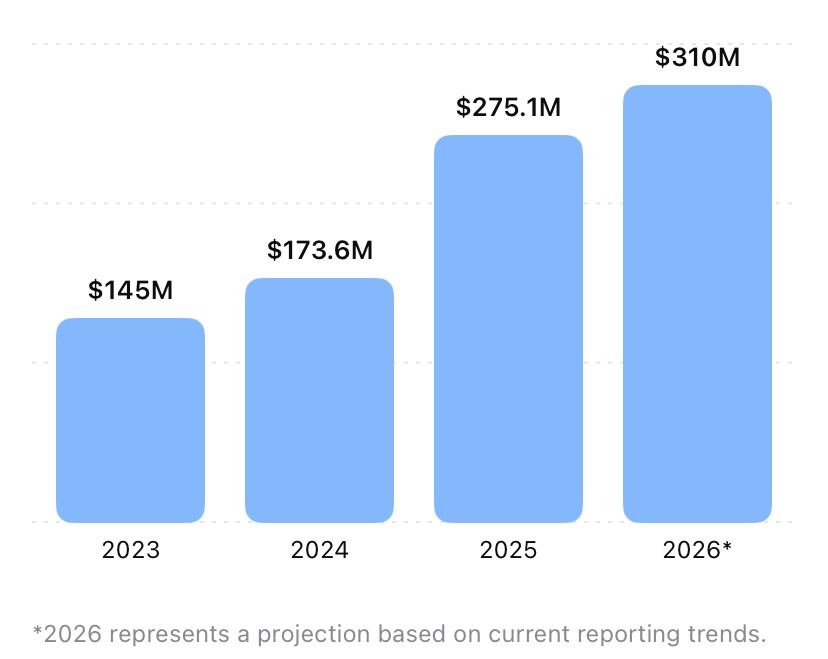
Figure 1: Reported financial losses from rental scams increased sharply between 2023 and 2026, rising from $145 million to a projected $310 million. The largest year-over-year increase occurred between 2024 and 2025, when reported losses jumped by 58.5%, highlighting the rapid evolution of rental fraud schemes, including AI-generated listings, impersonation scams, and fake property advertisements.
Sources: FBI Internet Crime Complaint Center (IC3) and Federal Trade Commission (FTC).
1. Be Suspicious of Prices That Seem Too Good to Be True
One of the most common warning signs is an unusually low rental price. For example:
- Similar apartments rent for $1,500 per month.
- A scam listing advertises the same type of property for $850.
While legitimate bargains exist, dramatically lower prices should immediately raise questions. Scammers often use attractive pricing to generate a large number of inquiries and pressure renters into acting quickly.
2. Never Send Money Before Seeing the Property
This is one of the most important rules of rental safety. Be cautious if someone asks you to:
- Pay a deposit immediately
- Wire money before a viewing
- Send funds to “hold” the property
- Pay application fees before verification
A legitimate landlord will typically allow you to inspect the property or provide a verified virtual tour before requesting significant payments.
3. Verify the Property Exists
Before moving forward, confirm that the property is real. You can:
- Search the address online
- Check property records
- Compare listings across multiple websites
- Use mapping tools to verify the location
If the property appears under different names, prices, or contact information, proceed carefully.
4. Watch for High-Pressure Tactics
Scammers frequently create a false sense of urgency. Common examples include:
- “Several people are interested.”
- “You must send the deposit today.”
- “I’m leaving the country tomorrow.”
- “The property will be gone by tonight.”
Pressure is often used to prevent victims from conducting proper research. A legitimate rental opportunity should allow reasonable time for questions and verification.
5. Be Careful With Unusual Payment Methods
The payment method can reveal a lot. Exercise caution if you’re asked to pay using:
- Wire transfers
- Cryptocurrency
- Gift cards
- Payment apps tied to personal accounts
- Untraceable methods
These payment options can make it difficult or impossible to recover funds once they’ve been sent.
6. Verify the Landlord or Property Manager

Before providing money or personal information, confirm that the person you’re dealing with is authorized to rent the property. Look for:
- Professional contact information
- Verified company websites
- Property management credentials
- Consistent ownership records
If something doesn’t match, investigate further before proceeding.
7. Watch for Poor Communication
Many scam listings contain noticeable inconsistencies. Possible warning signs include:
- Numerous spelling errors
- Generic responses
- Vague property details
- Contradictory information
- Refusal to answer basic questions
While mistakes happen, multiple inconsistencies should raise concerns.
8. Be Wary of Excuses for Why You Can’t View the Property
Scammers often provide elaborate explanations for why an in-person viewing isn’t possible. Examples include:
- They’re overseas.
- They’re serving in the military.
- They’re handling a family emergency.
- They’re traveling indefinitely.
While some situations may be legitimate, repeated excuses combined with payment requests are major red flags.
9. Protect Your Personal Information
Rental applications often require sensitive information. Only provide details such as:
- Social Security numbers
- Bank information
- Driver’s license copies
after verifying the legitimacy of the property and landlord. Identity thieves sometimes use fake rental listings solely to collect personal data.
10. Trust Your Instincts
If something feels wrong, don’t ignore it. Many scam victims later report that they noticed warning signs but felt pressured to continue. If a listing seems suspicious:
- Slow down.
- Ask questions.
- Verify details.
- Seek a second opinion.
It’s better to miss a legitimate opportunity than lose money to a scam.
Rental Scam Trends in Texas
Rental scams have become an increasingly common form of consumer fraud in Texas, fueled by the growing popularity of online rental marketplaces and social media housing groups. As more renters search for homes and apartments online, scammers have become increasingly sophisticated, creating fake listings, impersonating legitimate landlords, and convincing victims to send deposits or application fees for properties that either don’t exist or aren’t actually available for rent.
According to a recent analysis by the Federal Trade Commission (FTC), U.S. consumers reported nearly 65,000 rental scam complaints between 2020 and mid-2025, resulting in approximately $65 million in reported losses. The FTC notes that these figures likely represent only a fraction of the true impact, as many scams are never reported.
Texas has emerged as one of the states most affected by rental fraud. Analysis of FTC Consumer Sentinel data found that Dallas recorded the highest number of rental scam reports among major U.S. metropolitan areas, with Houston also ranking among the cities with the greatest number of complaints nationwide. This reflects Texas’ rapidly growing housing market and the increasing demand for rental properties, which scammers exploit by advertising attractive homes at below-market prices.
Young adults appear to be especially vulnerable. The FTC found that people aged 18 to 29 were approximately three times more likely than older adults to report losing money to a rental scam, with many cases beginning through fake listings on Facebook, which accounted for about half of all reported rental scam cases during the 12 months ending in June 2025. Craigslist was the second most commonly reported platform.
Common Rental Scam Warning Signs
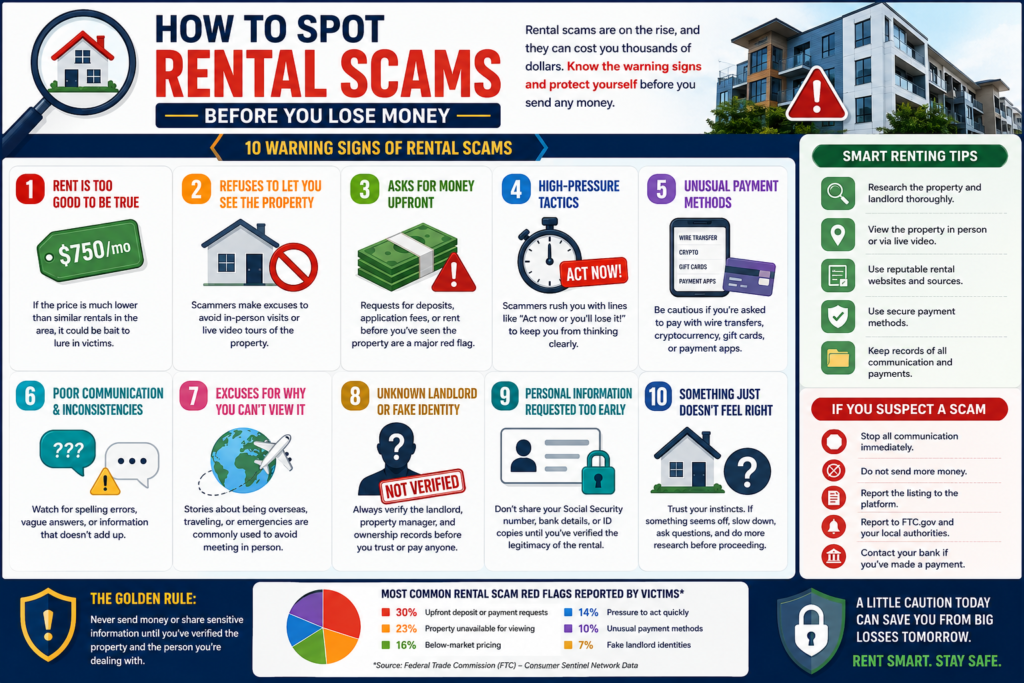
Fraudsters frequently rely on similar tactics to deceive prospective renters, including:
✔ Rent is significantly below market value
✔ Landlord refuses to meet
✔ Property cannot be viewed
✔ Payment requested upfront
✔Using self-guided tour codes from legitimate listings to make fake rentals appear authentic.
✔ Urgent pressure to act immediately
✔ Requests for unusual payment methods
✔ Poor communication or inconsistent details
✔ Personal information requested too early
The more red flags present, the greater the likelihood of fraud. As Texas’ rental market continues to grow, consumer awareness remains one of the strongest defenses against fraud. Verifying property ownership, touring a property before sending money, researching landlords, and avoiding pressure to make immediate payments can significantly reduce the risk of becoming a victim.
What to Do If You Think You’ve Encountered a Rental Scam
If you suspect a scam:
- Stop all communication.
- Do not send additional money.
- Save emails and messages.
- Report the listing to the platform.
- Contact your bank if payment was made.
- Report the incident to the FTC and local authorities.
Quick action may improve your chances of limiting financial losses.
How to Rent Safely Online
To reduce your risk:
- Use reputable rental platforms.
- Research market prices.
- Verify ownership records.
- View properties before paying.
- Keep records of communication.
- Use secure payment methods.
- Avoid rushing decisions.
These habits can help protect both your finances and personal information.
Final Thoughts
Rental scams continue to evolve, but most rely on the same basic strategy: creating urgency, building trust quickly, and convincing victims to send money before verifying the property. Understanding these tactics is one of the most effective ways to protect yourself during the rental process.
Before signing a lease or sending a deposit, take the time to research the property, verify the landlord’s identity, and question anything that seems unusual. A few extra minutes of caution can save you from significant financial loss and unnecessary stress.
Finding the right rental should be an exciting milestone, not a costly mistake. By staying informed and recognizing common warning signs, you can navigate the rental market more confidently and avoid becoming a victim of fraud.